Aug 3, 2026Crane Knowledge
European Overhead Crane vs Traditional Crane | 4 Key Advantages
Compare European overhead cranes with traditional cranes. Learn how lightweight design, energy efficiency, VFD control, and low noise can reduce operating and construction costs.
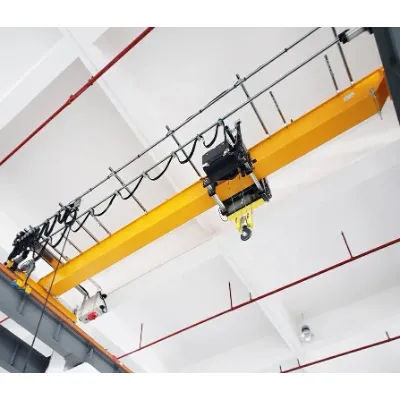
Why More Factories Choose European Overhead Cranes
As manufacturing facilities continue to modernize, more companies are replacing conventional overhead cranes with European overhead cranes. Although both crane types perform similar lifting tasks, European-style cranes offer significant advantages in energy efficiency, operating performance, workplace comfort, and long-term investment.
If you are planning a new workshop or upgrading an existing crane system, understanding these differences can help you make a better purchasing decision.
What Is a European Overhead Crane?
A European overhead crane is a modern crane system designed with lightweight components, compact dimensions, frequency-controlled drives, and high-efficiency motors. Compared with conventional overhead cranes, it delivers smoother movement, lower energy consumption, and reduced maintenance while maximizing available lifting height.
Typical applications include:
- Manufacturing plants
- Steel fabrication workshops
- Warehouses
- Automotive factories
- Machinery production
- Logistics centers
1. Lower Energy Consumption
One of the biggest advantages of a European overhead crane is its energy efficiency.
Traditional cranes often use larger motors that consume more electricity during daily operation. European cranes are designed with optimized transmission systems and high-efficiency motors, allowing them to perform the same lifting tasks while using less power.
Benefits include:
- Lower electricity consumption
- Reduced operating costs
- Improved motor efficiency
- Lower carbon footprint
For factories operating cranes multiple shifts per day, energy savings can significantly reduce long-term operating expenses.
2. Smooth Operation with Variable Frequency Drives (VFD)
Unlike conventional cranes that start and stop abruptly, European overhead cranes typically use Variable Frequency Drive (VFD) technology.
This allows the crane to accelerate and decelerate gradually.
Advantages of VFD control
- Smooth starting
- Precise positioning
- Reduced load swinging
- Better handling of delicate equipment
- Improved operator safety
This is especially important in industries requiring accurate positioning, such as mold manufacturing, precision machining, and equipment assembly.
3. Lower Noise for a Better Working Environment
Noise is often overlooked when selecting industrial equipment.
Traditional cranes can generate noticeable noise from motors, gearboxes, and braking systems. European cranes are designed with quieter drive systems and optimized mechanical components.
Lower noise levels help:
- Improve workplace comfort
- Reduce operator fatigue
- Support safer communication inside the workshop
- Create a more productive working environment
For factories operating continuously, lower noise contributes to a better overall work environment.
4. Lightweight Design Reduces Building Costs
Perhaps the greatest advantage of a European overhead crane is its lightweight design.
Compared with conventional cranes, European cranes typically have:
- Lower dead weight
- Compact end carriages
- Smaller wheel loads
- Optimized structural design
Because the crane places less load on the building structure, engineers may be able to design lighter runway beams and steel structures where appropriate.
Benefits include:
- Reduced steel consumption
- Lower foundation requirements
- Lower building construction costs
- Easier installation
- More economical workshop expansion
For new factory construction, this can result in substantial project savings beyond the crane itself.
European Overhead Crane vs Traditional Overhead Crane
Feature | European Overhead Crane | Traditional Overhead Crane |
|---|---|---|
Energy Consumption | Lower | Higher |
Starting Performance | Smooth VFD Control | Direct Start |
Noise Level | Lower | Higher |
Crane Weight | Lightweight | Heavier |
Wheel Load | Lower | Higher |
Building Requirements | Reduced Structural Load | Higher Structural Requirements |
Positioning Accuracy | High | Standard |
Long-Term Operating Cost | Lower | Higher |
Typical Applications
European overhead cranes are widely used in:
- Steel fabrication workshops
- Automotive manufacturing
- Mold factories
- CNC machining centers
- Equipment manufacturing
- Precision assembly lines
- Warehousing and logistics
Their combination of smooth motion, energy efficiency, and compact design makes them ideal for facilities that require reliable daily lifting operations.
Is a European Overhead Crane Worth the Investment?
While the initial purchase price of a European overhead crane may be higher than some conventional crane systems, many factories recover the difference through:
- Lower electricity bills
- Reduced maintenance costs
- Longer component life
- Improved production efficiency
- Savings in workshop construction
For businesses planning long-term production, the total cost of ownership is often lower than that of traditional cranes.
Conclusion
A European overhead crane is more than just a lifting machine—it is an investment in efficiency, safety, and long-term cost reduction.
Its key advantages include:
- Lower energy consumption
- Smooth and precise operation
- Reduced workplace noise
- Lightweight design
- Lower building construction costs
- Higher operating efficiency
For factories building new workshops or upgrading existing lifting systems, a European overhead crane is often the smarter long-term solution.
Looking for the Right European Overhead Crane?
Whether you are constructing a new facility or replacing an existing crane system, choosing the right crane configuration is essential.
Wanli Crane provides customized European overhead crane solutions with capacities, spans, lifting heights, and control systems tailored to your project requirements.
Contact our engineering team today for a free consultation and customized quotation.
Frequently Asked Questions (FAQ)
1. What is the difference between a European overhead crane and a traditional overhead crane?
European overhead cranes feature lightweight construction, compact dimensions, variable frequency drive (VFD) control, lower wheel loads, and higher energy efficiency. Traditional cranes are generally heavier and may consume more power.
2. Are European overhead cranes more energy efficient?
Yes. European overhead cranes are designed with high-efficiency motors and optimized drive systems, which typically reduce electricity consumption compared with conventional crane designs.
3. Why are European overhead cranes lighter?
They use optimized structural engineering, compact components, and advanced manufacturing techniques to reduce the crane's dead weight without compromising lifting performance.
4. Can a lightweight crane reduce building costs?
In many projects, yes. A lighter crane applies lower wheel loads to the runway beams and supporting structure, which may allow for a more economical steel building design, depending on engineering requirements.
5. Which industries commonly use European overhead cranes?
European overhead cranes are widely used in automotive manufacturing, steel fabrication, machinery production, mold manufacturing, warehouses, logistics centers, and precision assembly workshops.
6. Is a European overhead crane suitable for existing workshops?
Yes. Many European crane systems are designed for both new installations and retrofit projects, especially where headroom is limited or improved energy efficiency is desired.