Aug 12, 2026Crane Knowledge
What Is Crane Girder Camber? How to Check Overhead Crane Deflection
Learn what pre-camber is, why overhead crane girders use positive camber, how deflection affects trolley operation, and what buyers should check during crane acceptance.
What Is Crane Girder Camber? How to Check Overhead Crane Deflection
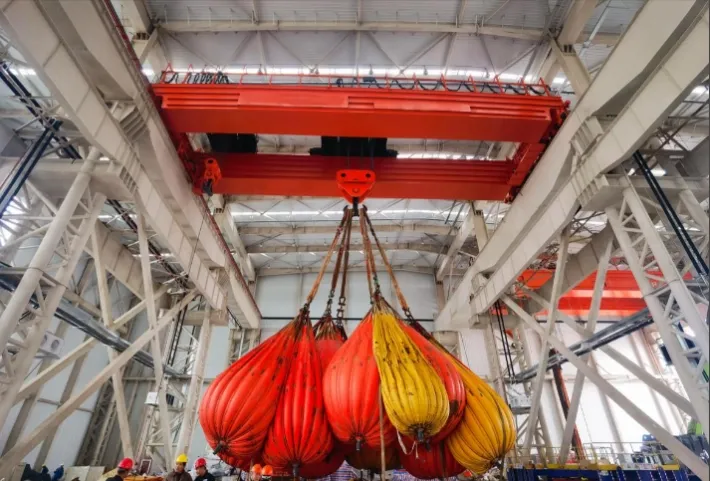
When accepting a new overhead crane, many buyers focus on the obvious things:
- Is the paint finish good?
- Does the crane look clean?
- Are the components properly installed?
- Does the hoist work normally?
These checks are important, but they do not tell you everything about the crane structure.
One of the technical parameters worth checking is girder camber.
You may also hear terms such as:
- Crane girder camber
- Pre-camber
- Positive camber
- Girder deflection
- Bridge girder deflection
So, what do these terms mean?
And why does the main girder of an overhead crane sometimes appear to be slightly higher in the middle?
What Is Pre-Camber in an Overhead Crane Girder?
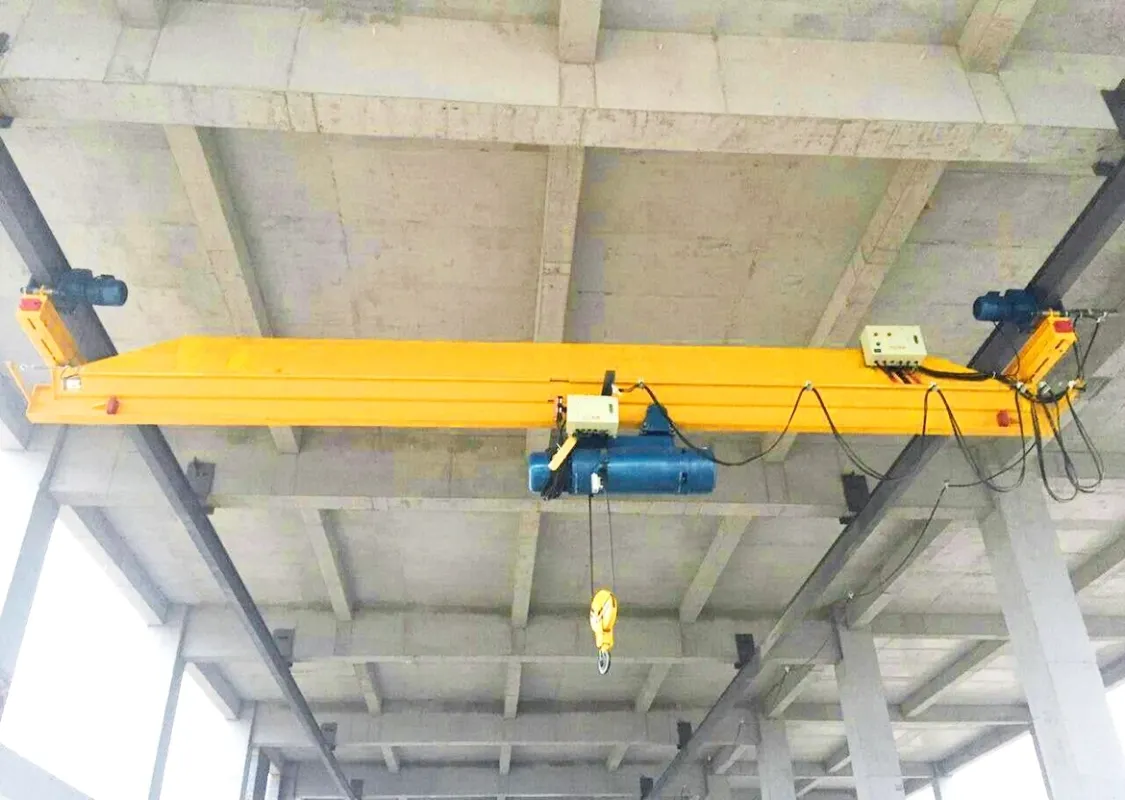
Pre-camber means that the crane girder is intentionally manufactured with a slight upward curvature before the crane is placed under its operating load.
In simple terms:
The middle of the girder is slightly higher than the ends.
When the crane is unloaded, you may see a small upward curve.
When the trolley and load are applied, the girder deflects downward.
The purpose of the pre-camber is to help manage the expected structural deformation and operating geometry of the crane.
International crane guidance recognizes positive camber as a common feature of fabricated crane girders. ISO 22986 explains that pre-cambering can be used to help control girder slopes and support proper trolley movement under load.
Why Does an Overhead Crane Girder Need Pre-Camber?
A crane girder is a structural beam.
When it carries:
- Its own weight
- Hoist weight
- Trolley weight
- Rated load
- Dynamic effects from operation
it can experience downward elastic deflection.
This is normal structural behavior.
The problem is not simply:
"Does the girder move downward?"
The important question is:
"Is the deformation within the design requirements?"
Pre-camber can help the girder achieve a more favorable operating geometry when the crane is carrying its intended load.
It should therefore be considered as part of the overall structural design rather than as a cosmetic feature.
What Happens When the Crane Is Loaded?
Imagine a bridge crane with a long main girder.
Without Load
The girder may have a slight upward camber.
With the Trolley and Load
The girder deflects downward.
The actual operating shape is therefore affected by both:
Initial camber + structural deflection
This is why simply looking at an unloaded crane is not enough to determine its actual performance.
The design needs to consider how the girder behaves under the specified loading conditions.
Does Pre-Camber Make the Crane Stronger?
This is an important point.
Pre-camber itself does not automatically increase the structural strength of the girder.
ISO 22986 specifically notes that pre-cambering has no direct effect on girder strength. Its purpose can include helping control deformation and slope, as well as supporting proper trolley movement.
So you should not think:
More camber = stronger crane.
That is incorrect.
The crane's structural capacity depends on the complete engineering design, including:
- Material
- Girder section
- Plate thickness
- Welding
- Structural connections
- Span
- Rated load
- Duty class
- Dynamic loading
- Applicable design standard
Pre-camber is only one part of the structural design.
Why Does Girder Deflection Matter?
Some deflection is expected when a crane is loaded.
But excessive deformation can create operating problems.
For example, excessive vertical deflection may affect:
- Trolley movement
- Trolley braking
- Crane rail forces
- Mechanical alignment
- Vibration
- Wear
- Long-term component life
ISO 22986 states that elastic deformation should not prevent the trolley from moving or braking as designed, create excessive transverse forces on rails, or cause unacceptable mechanical misalignment and wear.
This is why girder stiffness and deflection are important during crane design and inspection.
Can Excessive Girder Deflection Make the Trolley Work Harder?
Potentially, yes.
If the girder develops excessive deformation, the trolley may experience a less favorable running geometry.
In severe cases, this can contribute to:
- Increased rolling resistance
- Abnormal wheel loading
- Additional mechanical stress
- Increased motor or drive demand
- Uneven operation
However, it would be incorrect to say that any lack of visible camber will automatically burn the trolley motor.
Motor overload can have many causes, including:
- Excessive load
- Mechanical resistance
- Misalignment
- Brake problems
- Electrical issues
- Wheel or rail problems
- Drive system faults
Therefore, if a crane shows abnormal trolley movement or high motor current, the complete system should be inspected rather than blaming camber alone.
Why Is Camber Important During Crane Acceptance?
This is where buyers can learn something useful.
A crane can have:
Good paint + clean welding + new electrical components
and still require further structural verification.
During acceptance, buyers should review the manufacturer's technical documents and applicable inspection requirements.
Depending on the project, checks may include:
- Girder geometry
- Camber
- Vertical deflection
- Trolley movement
- Crane travel
- Load testing
- Brake performance
- Electrical functions
- Safety devices
Some crane inspection procedures specifically measure bridge girder deflection under rated load after the load has been applied several times.
How Can You Check the Crane Girder Camber?
For a basic visual or dimensional check, the principle is simple:
Measure the relative height of the girder along its span.
One method described in crane inspection guidance uses a reference line or plumb bob to compare measurements with the trolley positioned at different locations and under load.
For a professional acceptance inspection, however, use the measurement method specified by the manufacturer, project specification or applicable standard.
Possible tools include:
- Surveying instruments
- Laser measurement tools
- Measuring tape with a reference line
- Plumb bob
- Digital level
- Other calibrated measurement equipment
The exact method should match the crane design and acceptance procedure.
Do Not Judge Camber Only by Looking at the Girder
This is an important point for crane buyers.
A girder that looks slightly upward in the middle is not automatically good.
A girder that looks almost straight is not automatically bad.
Why?
Because the required camber depends on:
- Span
- Girder type
- Self-weight
- Hoist and trolley weight
- Rated load
- Structural design
- Manufacturing method
- Applicable standard
For example, some rolled-section girders may not require the same camber treatment as fabricated plate girders. CMAA 70 provides different guidance for rolled sections and fabricated plate girders.
Therefore, the correct question is:
"Does the measured camber and deflection meet the design and acceptance requirements?"
What Is the Difference Between Camber and Deflection?
These two terms are often confused.
Camber
Camber is the intentional upward curvature or initial geometry of the girder.
Think:
Before loading → slightly upward
Deflection
Deflection is the change in the girder's shape or position when a load is applied.
Think:
Under load → moves downward
A simple way to remember:
Camber = initial geometry
Deflection = movement under load
Both should be considered when evaluating crane girder performance.
What If the Girder Has Permanent Downward Deformation?
This is more concerning than normal elastic deflection.
A crane girder may deflect elastically when loaded and return toward its original position after the load is removed.
But if the girder develops permanent deformation, such as a persistent downward shape that is not explained by the original design, it should be investigated.
Possible causes can include:
- Overloading
- Repeated excessive loading
- Structural damage
- Manufacturing problems
- Welding-related deformation
- Collision
- Long-term fatigue or other deterioration
Do not simply continue using the crane because it still "looks usable."
A qualified engineer or crane professional should assess the condition.
How Should Buyers Check a New Overhead Crane?
Before accepting a new crane, don't only inspect the paint.
Use a more complete checklist.
1. Check the Main Girder
Look for:
- Visible deformation
- Weld quality
- Surface damage
- Structural connections
- Camber according to the approved drawing or specification
2. Check the Trolley
Test:
- Forward movement
- Reverse movement
- Acceleration
- Braking
- Abnormal noise
3. Check the Hoist
Test:
- Lifting
- Lowering
- Brake
- Limit switches
- Emergency functions
4. Check the Crane Travel
Make sure the crane moves smoothly along the runway.
Look for:
- Abnormal vibration
- Wheel noise
- Skewing
- Rail problems
5. Check Load Testing
Where required, perform the specified load tests according to the applicable project and safety requirements.
6. Check Documentation
Ask for:
- General arrangement drawing
- Structural drawings
- Test records
- Inspection records
- Electrical documentation
- Operation manual
- Maintenance manual
This gives the buyer a much better picture of the crane than appearance alone.
What Should You Ask the Crane Supplier?
Before ordering or accepting an overhead crane, ask these questions:
Question 1
What is the designed camber of the main girder?
Question 2
What is the allowable vertical deflection under the rated load?
Question 3
Which standard or design specification is used for the calculation?
Question 4
How will the camber and deflection be measured during acceptance?
Question 5
Can you provide the relevant inspection or test records?
A professional supplier should be able to explain the design basis and inspection method.
Why You Should Not Use One Universal Camber Number
You may see information online saying:
"The camber should always be X mm."
Be careful with this kind of advice.
There is no single camber value that can be applied to every overhead crane.
The required value depends on the specific crane.
For example:
A 10-meter span crane and a 30-meter span crane obviously do not have the same structural geometry.
Likewise, a 5-ton crane used occasionally is different from a heavy-duty crane operating continuously.
The correct value should come from:
Engineering calculation + approved drawings + applicable standards + acceptance requirements
FAQ About Overhead Crane Girder Camber
What is pre-camber in an overhead crane?
Pre-camber is an intentional upward curvature designed into the crane girder before loading.
It helps manage the girder's operating geometry and expected deformation.
Why does an overhead crane girder have an upward curve?
Because the girder will experience downward deflection under its own weight and the weight of the trolley and load.
The initial camber can help compensate for part of this deformation and control the operating slope.
Does more camber mean a stronger crane?
No.
Pre-camber does not automatically increase the structural strength of the crane.
Strength depends on the complete structural design.
How do I measure crane girder camber?
A suitable measurement system can be used to compare the girder's elevation along the span.
For formal acceptance, follow the manufacturer's procedure, project specification and applicable standard.
What is the difference between crane camber and deflection?
Camber is the initial upward curvature of the girder.
Deflection is the change in its position or shape under load.
Can excessive girder deflection damage the trolley?
Excessive deformation can affect trolley movement, braking, rail forces and mechanical alignment.
If abnormal movement occurs, the crane should be inspected.
Can a crane girder sag after years of use?
A crane girder can develop permanent deformation due to factors such as overload, damage, manufacturing issues or long-term deterioration.
A noticeable permanent downward deformation should be investigated by qualified personnel.
Should I check camber when accepting a new crane?
Yes, where required by the project specification or applicable inspection procedure.
Camber and deflection are structural parameters that can provide useful information beyond visual appearance.
Final: Don't Judge a Crane Only by Its Paint
A new overhead crane can look impressive.
The paint may be perfect.
The steel may look clean.
The electrical cabinet may look modern.
But a professional buyer should look beyond appearance.
When checking an overhead crane, pay attention to:
Girder geometry + camber + deflection + trolley movement + load testing + documentation
Pre-camber is not simply a cosmetic feature.
It is part of the structural and operational design of many crane girders.
The key is not to ask:
"Does the beam look curved enough?"
Instead, ask:
"Does the measured camber and deflection meet the approved design and applicable requirements?"
That is the difference between simply looking at a crane and actually inspecting one.