Aug 6, 2026Crane Knowledge
Why Do Outdoor Gantry Cranes Have Cantilevers?
Learn why outdoor gantry cranes use cantilevers, their advantages for loading efficiency, recommended length limits, design considerations, and common industrial applications.
Why Do Outdoor Gantry Cranes Have Cantilevers?
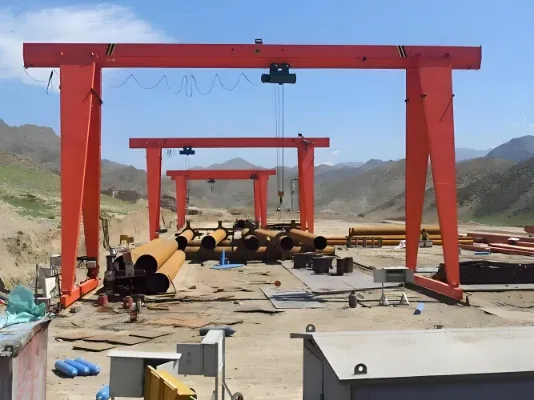
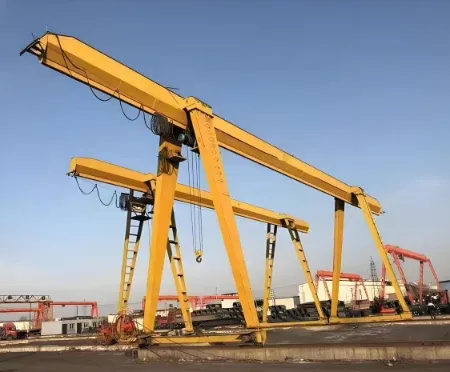
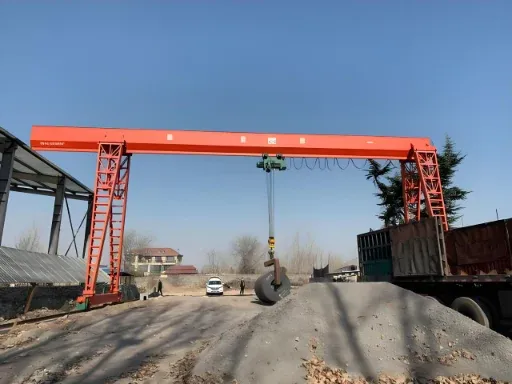
Outdoor gantry cranes are commonly equipped with cantilever extensions on one or both sides of the main girder. Although they may appear to be a simple structural addition, cantilevers play an important role in improving lifting efficiency, expanding the working area, and making material handling more flexible.
This article explains why cantilevers are used, where they provide the greatest benefits, and why longer is not always better.
What Is a Gantry Crane Cantilever?
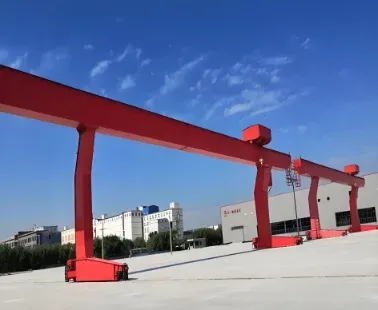
A gantry crane cantilever is an extension of the main girder that projects beyond the supporting legs.
Unlike the main span between the legs, the cantilever allows the hoist trolley to travel outside the leg structure, enabling lifting operations beyond the normal working area.
Depending on project requirements, gantry cranes may have:
- Single cantilever
- Double cantilever
- No cantilever
The choice depends on the working environment and loading requirements.
Benefits of a Gantry Crane Cantilever
Larger Working Area
The biggest advantage is extending the lifting coverage without increasing the crane span.
This allows operators to reach loading areas located outside the main support legs.
Easier Truck Loading
When trucks park beside the crane runway, the cantilever enables cargo to be loaded directly onto vehicles without moving them underneath the crane.
This improves operational efficiency and reduces waiting time.
Better Use of Limited Space
In outdoor storage yards, products are often stacked beneath the crane legs.
With cantilevers, lifting operations can still be carried out outside the stacked materials, maximizing available storage space.
Improved Material Flow
Factories handling steel structures, precast concrete, pipes, containers, and heavy equipment often use cantilever gantry cranes because materials can be transferred more smoothly between storage areas and transportation vehicles.
Common Applications
Cantilever gantry cranes are widely used in:
- Steel fabrication plants
- Precast concrete factories
- Container yards
- Railway freight terminals
- Shipyards
- Outdoor storage yards
- Wind turbine component yards
These applications frequently require lifting outside the normal crane span.
Why Can't the Cantilever Be Too Long?
Although longer cantilevers provide a wider operating range, they also introduce greater structural challenges.
An excessively long cantilever increases:
- Bending moment on the main girder
- Structural deflection
- Wheel load imbalance
- Trolley stability issues
- Manufacturing costs
For these reasons, crane designers generally recommend that the cantilever length remain within approximately 30% of the main span, although the exact value depends on crane capacity, span, duty class, and applicable design standards.
Every cantilever should be verified through structural calculations rather than simply extending its length.
Factors to Consider When Designing a Cantilever
When selecting a cantilever configuration, engineers typically evaluate:
- Rated lifting capacity
- Span length
- Maximum lifting height
- Trolley travel distance
- Working frequency
- Wind load
- Foundation conditions
- Applicable crane standards
Proper engineering ensures both safety and long-term reliability.
Conclusion
A gantry crane cantilever is much more than an additional extension—it significantly increases operational flexibility while improving loading efficiency and space utilization.
However, longer is not always better. Proper structural design is essential to balance working range, safety, stability, and cost.
If your project requires loading trucks beside the crane, handling materials in crowded yards, or extending lifting coverage, a cantilever gantry crane may be the ideal solution.
FAQ
1. What is the purpose of a gantry crane cantilever?
A cantilever extends the working area beyond the crane legs, allowing materials to be lifted outside the main span for easier loading and unloading.
2. Can every gantry crane have a cantilever?
Not necessarily. Cantilevers are optional and are selected based on the application's lifting requirements, site layout, and engineering calculations.
3. How long should a gantry crane cantilever be?
In many projects, the cantilever length is typically limited to around 30% of the main span. The exact length depends on crane capacity, structural design, and applicable standards.
4. Does a longer cantilever make the crane better?
No. A longer cantilever increases bending stress, deflection, and structural complexity. An optimized design offers the best balance between reach and safety.
5. Which industries commonly use cantilever gantry cranes?
Steel fabrication, precast concrete, logistics yards, shipyards, railway terminals, container yards, and outdoor storage facilities commonly use cantilever gantry cranes.