Aug 26, 2026Buying Guide
16-Ton 19m Span Overhead Crane with MD Double-Speed Hoist
Explore a 16-ton, 19m span overhead crane with an MD double-speed electric hoist and A4 duty class for stable lifting, accurate positioning and easier maintenance.
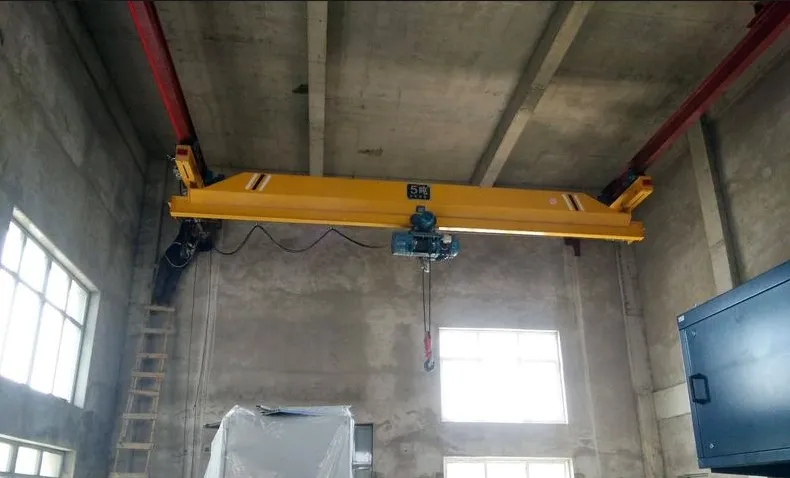
16-Ton 19m Span Overhead Crane with MD Double-Speed Electric Hoist
Some buyers believe that an overhead crane is good enough as long as it can lift the required load.
However, rated lifting capacity is only the starting point.
A properly selected crane can improve positioning efficiency, reduce unnecessary load movement and make daily operation easier. An incorrectly configured crane may still lift the load, but frequent failures, difficult positioning and unsuitable operating speeds can gradually increase production costs.
For general industrial lifting, a 16-ton overhead crane with a 19-meter span, an MD double-speed electric hoist and an A4 working class can provide a practical balance between performance and cost—provided that these parameters match the actual working conditions.
Recommended Crane Configuration
The basic configuration discussed in this article includes:
Parameter | Recommended specification |
|---|---|
Rated capacity | 16 tons |
Crane span | 19 meters |
Lifting mechanism | MD double-speed wire rope electric hoist |
Working class | A4 |
Application | General industrial lifting |
Control options | Pendant control or remote control |
Power supply | Customized to local requirements |
Lifting height | Customized according to the workshop |
Travelling speed | Selected according to operating requirements |
This configuration is not a universal solution for every factory. The lifting height, travelling speed, control method, runway system and electrical components must still be confirmed according to the project.
Why “It Can Lift the Load” Is Not Enough
Two cranes may both have a rated capacity of 16 tons, but their actual performance can be very different.
A complete overhead crane selection should consider:
- Maximum and average load
- Crane span
- Lifting height
- Daily operating frequency
- Required positioning accuracy
- Working class
- Travelling distance
- Factory power supply
- Indoor or outdoor environment
- Runway and building conditions
If these parameters are not properly matched, the crane may experience slow handling, excessive load movement, frequent component wear or difficulty placing loads accurately.
The correct crane is not simply one that can lift 16 tons. It must also perform the required lifting work safely and efficiently throughout its intended service life.
Advantages of an MD Double-Speed Electric Hoist
An MD wire rope electric hoist provides two lifting speeds: a normal speed for general lifting and a lower speed for accurate positioning.
During daily operation, the operator can use the normal speed to move the load efficiently through most of the lifting distance. When the load approaches its final position, the operator can switch to the lower speed.
This is useful for:
- Machinery assembly
- Mold installation
- Equipment maintenance
- Steel component handling
- Machine loading
- Accurate load placement
The slower lifting speed gives the operator more control near the final position. It can reduce repeated lifting adjustments and lower the risk of sudden vertical movement damaging the load.
However, a double-speed hoist does not eliminate every type of load swing. Horizontal swinging is also affected by crane travelling speed, acceleration, braking, rigging method and operator technique.
If very smooth acceleration and deceleration are required, variable-frequency control should also be considered.
Faster Lifting and More Accurate Positioning
Using only one high lifting speed can make accurate positioning difficult. The operator may have to stop and restart the hoist several times before placing the load correctly.
Using only a slow speed improves control but reduces overall lifting efficiency.
The MD double-speed hoist combines both functions:
- Normal speed for efficient lifting
- Low speed for final positioning
This allows operators to adjust the lifting speed according to the actual stage of the operation.
For factories handling machinery, molds or assembled components, reducing repeated adjustments can save time during every lifting cycle. These small improvements can become significant when the crane is used regularly.
Is A4 Duty Class Suitable for This Crane?
A4 is generally considered a medium-duty working class under the commonly used A1–A8 crane classification system.
It may be suitable for general manufacturing and regular material-handling applications where the crane operates at a moderate frequency and does not continuously lift loads close to its rated capacity.
Typical applications may include:
- Machinery workshops
- Equipment assembly
- General steel fabrication
- Factory maintenance
- Mold handling
- Warehouse loading
- Intermittent production lifting
A4 should not be selected only because the crane has a 16-ton capacity.
Before confirming the working class, the supplier should evaluate:
- Average load weight
- Maximum load weight
- Percentage of full-load lifts
- Number of lifting cycles
- Starts per hour
- Daily operating hours
- Number of work shifts
- Required service life
If the crane will operate continuously, handle loads close to 16 tons frequently or work in a severe environment, a higher working class may be required.
Why Equipment Matching Matters
An overhead crane is a complete system rather than a collection of unrelated components.
The main girder, end carriages, hoist, motors, brakes, wheels, electrical controls and runway must work together.
Good system matching can provide:
- More stable crane travelling
- Better lifting control
- Suitable motor capacity
- Correct braking performance
- Reduced abnormal component wear
- Easier maintenance
- Better spare-parts compatibility
Simply combining a large main girder with a low-cost hoist or electrical system does not necessarily create a reliable crane.
The structural and mechanical design should be completed according to the crane capacity, span, working class and actual operating conditions.
Installation and Commissioning Affect Future Reliability
Even a properly manufactured crane may experience problems if the runway or electrical system is installed incorrectly.
Installation and commissioning should include checks such as:
- Runway gauge and alignment
- Rail level and straightness
- Main girder and end-carriage assembly
- Wheel contact and crane travelling
- Hoist installation
- Electrical wiring
- Limit switches
- Brake adjustment
- Control direction
- No-load test
- Rated-load test, where required
- Safety-device inspection
Professional installation support, clear drawings and commissioning guidance can reduce the need for repeated adjustment after the crane enters service.
For overseas projects, the service scope should be confirmed before ordering. Depending on the supplier and destination, support may include installation drawings, video guidance, remote commissioning assistance or on-site technical service.
Easier Maintenance and Spare-Parts Replacement
Maintenance cost is influenced not only by component price but also by how quickly the correct replacement part can be identified and supplied.
A well-matched crane should have:
- Clear component specifications
- Electrical diagrams
- Operation and maintenance manuals
- Replaceable standard parts where practical
- Traceable motor, brake and gearbox models
- An available spare-parts list
This helps maintenance teams avoid problems caused by incompatible motors, brakes, contactors or control components.
Before purchasing, ask the supplier to provide a recommended spare-parts list. Frequently used wear parts and electrical components can be prepared in advance, especially for overseas projects where international delivery may take time.
The Cost of Downtime Can Exceed the Price Difference
Buyers often compare cranes only by their initial quotation.
However, the real cost of an overhead crane also includes:
- Installation and commissioning
- Preventive maintenance
- Spare parts
- Production interruptions
- Repair labor
- Delayed deliveries
- Idle workers and production equipment
If a crane is connected to an important production process, one day of downtime may cost more than the price difference between a correctly configured crane and a lower-priced alternative.
This does not mean that the most expensive crane is always the best. It means the crane should be selected according to the actual production requirements rather than the lowest purchase price alone.
Information Required Before Ordering
To confirm whether this 16-ton, 19-meter-span, A4 crane configuration is suitable, provide:
- Maximum lifting load
- Average lifting load
- Crane span
- Required lifting height
- Workshop length
- Daily operating hours
- Estimated lifting cycles per hour
- Frequency of full-load lifting
- Indoor or outdoor operation
- Local power supply
- Runway beam drawings
- Required control method
- Material being handled
- Installation location and destination country
These details allow the manufacturer or supplier to verify the structure, hoist, motor, working class and electrical configuration.
Conclusion
A crane should do more than simply lift the required weight.
For suitable general industrial applications, a 16-ton, 19-meter-span overhead crane equipped with an MD double-speed electric hoist and designed for A4 duty can provide efficient lifting and better low-speed positioning.
The double-speed hoist allows operators to use normal speed for lifting efficiency and low speed for final placement. A properly matched crane system can also make maintenance and spare-parts replacement easier.
However, A4 is suitable only when it matches the actual load spectrum and utilization level. Before ordering, the crane supplier should verify the average load, operating frequency, workshop conditions and expected service life.
Send us your lifting capacity, span, lifting height, operating frequency and workshop drawing. We can help you verify the crane configuration and prepare a suitable quotation.
Frequently Asked Questions
1. What is an MD double-speed electric hoist?
An MD electric hoist is a wire rope hoist with normal and low lifting speeds. Normal speed is used for efficient lifting, while low speed helps with accurate final positioning.
2. Is an MD hoist better than a single-speed CD hoist?
It is more suitable when the operator needs both normal lifting efficiency and low-speed positioning. A CD single-speed hoist may be sufficient for simple or infrequent material handling.
3. Does a double-speed hoist prevent load swinging?
It can improve vertical positioning, but it does not completely prevent horizontal swing. Crane travelling acceleration, braking, rigging and operator technique also affect load movement.
4. Is A4 suitable for every 16-ton overhead crane?
No. Duty class depends on utilization and load spectrum, not lifting capacity alone. High-frequency or near-full-load operation may require a higher class.
5. Is a 16-ton, 19-meter-span crane single girder or double girder?
The final structure must be verified according to the design, working class, lifting height and applicable standards. For a 16-ton capacity and 19-meter span, a double-girder hoist crane is often considered, but it should not be selected without engineering confirmation.
6. What installation support can an overseas buyer receive?
Support may include foundation and runway drawings, installation manuals, electrical diagrams, video guidance, remote commissioning assistance or on-site service. The exact service scope should be confirmed in the contract.
7. Which spare parts should be prepared?
Common recommendations include brake parts, contactors, limit switches, control relays, wire-rope guides and other wear or electrical parts. The final list should match the actual component models.