Aug 31, 2026Buying Guide
Chain Hoist vs Wire Rope Hoist: How to Choose?
Compare electric chain hoists and wire rope hoists by capacity, lifting height, headroom, maintenance and application to choose the right lifting equipment.
Chain Hoist vs Wire Rope Hoist: How to Choose?
Should you choose an electric chain hoist or an electric wire rope hoist?
The main difference between these two hoists is not simply their price. Their lifting capacity, lifting height, headroom, operating frequency and inspection requirements are all different.
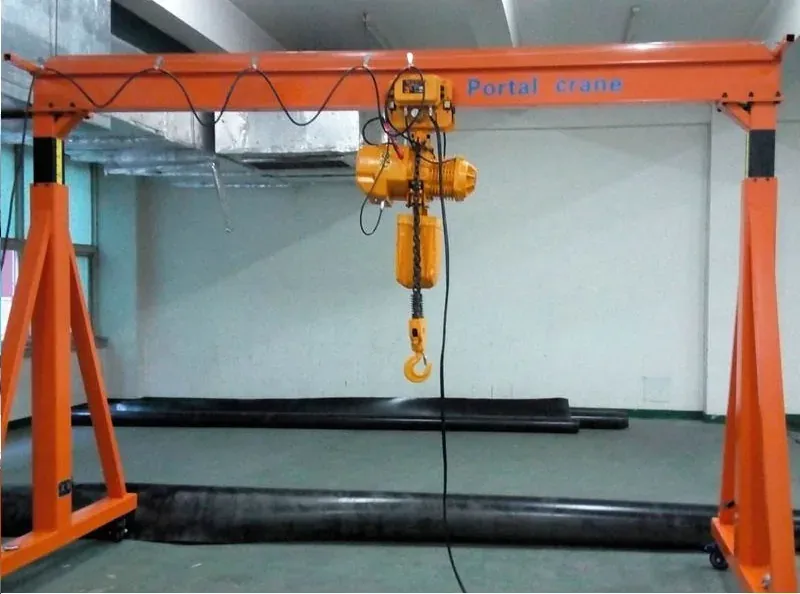
An electric chain hoist is generally compact, lightweight and easy to maintain. It is commonly used for small and medium loads, workstations, workshops and localized lifting operations.
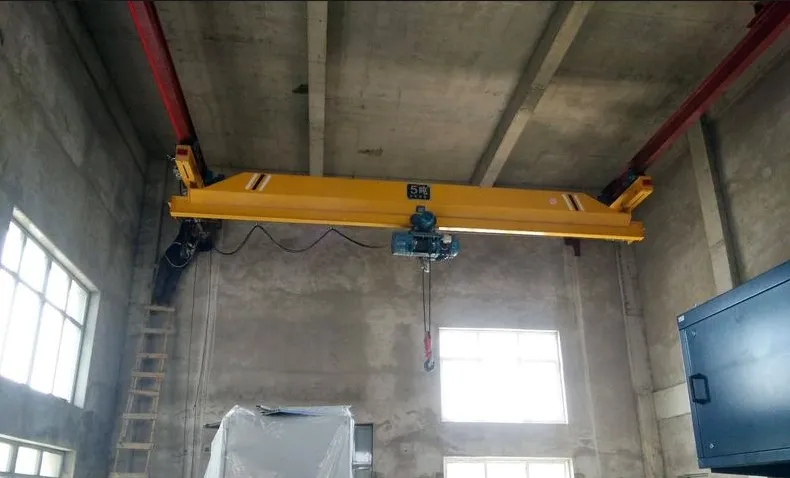
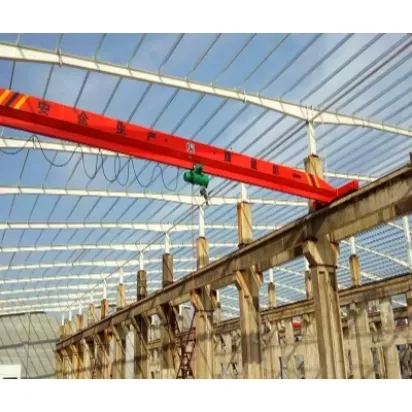
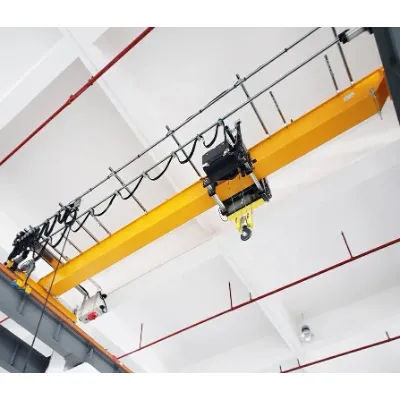
A wire rope hoist normally offers a higher lifting capacity, faster lifting speed and smoother operation. It is widely used on overhead cranes and gantry cranes, especially for large-capacity or long-travel lifting operations.
Neither option is always better. The right choice depends on your actual working conditions.
What Is an Electric Chain Hoist?
An electric chain hoist uses a load chain to raise and lower materials. The chain passes through the lifting mechanism and is collected inside a chain bag.
Its compact structure makes it suitable for applications where installation space and equipment weight are important.
Common applications include:
- Workstation cranes
- Jib cranes
- KBK crane systems
- Assembly lines
- Repair workshops
- Warehouses
- Portable gantry cranes
- Small machinery workshops
Electric chain hoists are often selected for small and medium lifting capacities. However, their operating frequency depends on the hoist model and duty class—not only on whether they use a chain.
What Is an Electric Wire Rope Hoist?
An electric wire rope hoist uses a steel wire rope wound around a drum to lift and lower a load.
Compared with most chain hoists, wire rope hoists usually provide higher lifting capacities, faster lifting speeds and greater lifting heights. They are widely installed on industrial overhead cranes and gantry cranes.
Common applications include:
- Single-girder overhead cranes
- Double-girder overhead cranes
- Industrial gantry cranes
- Steel fabrication plants
- Precast concrete plants
- Machinery manufacturing workshops
- Warehouses and material yards
- High-capacity production lines
Standard wire rope hoists include single-speed, dual-speed and variable-frequency models. Low-headroom versions are also available for buildings with limited vertical space.
Chain Hoist vs Wire Rope Hoist: Key Differences
Comparison | Electric chain hoist | Electric wire rope hoist |
|---|---|---|
Lifting medium | Load chain | Steel wire rope |
Typical capacity | Small and medium loads | Medium and heavy loads |
Equipment size | Compact | Generally larger |
Self-weight | Relatively light | Relatively heavy |
Lifting height | Suitable for moderate heights | Better for greater lifting heights |
Lifting speed | Usually slower | Usually faster |
Operation | Stable and precise | Smooth and suitable for long travel |
Noise level | Generally low | Depends on motor and gearbox design |
Maintenance | Relatively straightforward | Requires rope and drum inspection |
Headroom | Compact models available | Low-headroom models available |
Common cranes | Jib, KBK and workstation cranes | Overhead and gantry cranes |
Typical application | Localized and precise lifting | Industrial and heavy-duty lifting |
Actual performance varies by manufacturer, model, configuration and duty class.
Advantages of an Electric Chain Hoist
Compact size and low self-weight
Chain hoists usually have a compact body and lower self-weight. This can reduce the load placed on the supporting crane structure.
They are suitable for small workshops, workstation cranes and applications where installation space is limited.
Simple daily maintenance
The lifting chain does not need to be wound evenly around a drum. This reduces the risk of rope crossover and eliminates the need for a wire-rope guide.
Regular lubrication, chain inspection and brake inspection are still necessary.
Precise load positioning
Electric chain hoists are commonly used for equipment assembly, maintenance and localized lifting. Dual-speed or variable-frequency models provide better control when positioning sensitive components.
Suitable for different crane systems
An electric chain hoist can be installed on:
- Fixed suspension points
- Manual trolleys
- Electric trolleys
- Jib cranes
- Portable gantry cranes
- KBK light crane systems
This makes it a flexible solution for many small and medium lifting applications.
Advantages of a Wire Rope Hoist
Higher lifting capacity
Wire rope hoists are generally better suited to medium and large loads. This is why many industrial overhead cranes and gantry cranes use wire rope hoists.
For heavy-duty applications, a double-girder crane may use a dedicated wire rope trolley rather than a standard monorail hoist.
Greater lifting height
The wire rope is wound around a drum, making this hoist type suitable for applications requiring a large vertical lifting distance.
It is commonly selected for tall workshops, material yards and projects with deep lifting requirements.
Faster and smoother operation
Wire rope hoists are available with higher lifting speeds and variable-frequency control. Smooth acceleration and deceleration help reduce load swing and improve positioning accuracy.
Suitable for industrial crane systems
Wire rope hoists are widely used in production environments where the crane travels over a large working area and handles loads repeatedly.
Correct duty-class selection is still essential for high-frequency operation.
Which Hoist Is Better for a Low Workshop?
A low building does not automatically mean that you must choose a chain hoist.
Both chain hoists and wire rope hoists are available in low-headroom configurations. The correct choice depends on the available space between the runway beam and the roof, as well as the required hook height.
For a low workshop, confirm the following measurements:
- Building clear height
- Runway beam elevation
- Distance between the runway and roof
- Required maximum hook height
- Crane girder depth
- Hoist headroom dimension
A low-headroom wire rope hoist can position the drum and motor beside the crane girder, allowing the hook to rise closer to the beam.
Before ordering, ask the supplier to provide a crane layout drawing rather than selecting the hoist based only on product photos.
Inspection Differences Between the Two Hoists
Inspection is one of the most important differences between chain and wire rope hoists.
Wire rope inspection
Some common wire rope problems can be identified during a visual inspection, including:
- Broken outer wires
- Corrosion
- Kinks
- Flattening
- Birdcaging
- Abrasion
- Diameter reduction
- Uneven winding
However, visual inspection alone may not reveal every internal defect. The rope must be inspected according to the manufacturer’s requirements and applicable safety standards.
A damaged wire rope must be replaced when it reaches the specified rejection criteria.
Load chain inspection
A load chain should be cleaned before inspection. Check it for:
- Excessive elongation
- Reduced link diameter
- Cracks
- Corrosion
- Twisted links
- Deformation
- Poor lubrication
- Damaged chain guides
Some damage may occur in contact areas between chain links and may not be obvious during a quick visual check. Accurate measurement and periodic professional inspection are therefore important.
Do not weld, reshape or repair a damaged load chain. Replace it with a chain approved for the specific hoist model.
When Should You Choose a Chain Hoist?
An electric chain hoist may be the better choice when:
- The lifting capacity is relatively small.
- The equipment must be compact and lightweight.
- The lifting area is localized.
- The required lifting height is moderate.
- Precise positioning is important.
- The hoist will be installed on a jib or workstation crane.
- Simple daily maintenance is preferred.
- Installation space is limited.
For frequent operation, select a chain hoist with the correct duty class rather than assuming that every chain hoist is suitable.
When Should You Choose a Wire Rope Hoist?
An electric wire rope hoist may be more suitable when:
- The lifting capacity is relatively high.
- A greater lifting height is required.
- Faster lifting speed is important.
- The hoist will be used on an overhead or gantry crane.
- The load needs to travel across a large workshop.
- Smooth acceleration and deceleration are required.
- The crane is part of an industrial production process.
- A low-headroom wire rope design is required.
For very heavy or high-frequency applications, a dedicated double-girder trolley may provide a better solution.
Do Not Select a Hoist Based Only on Price
A lower purchase price does not necessarily mean a lower total cost.
An incorrectly selected hoist can lead to:
- Frequent motor overheating
- Rapid brake wear
- Chain or wire rope damage
- Production downtime
- Higher maintenance expenses
- Shorter equipment life
- Increased safety risks
Before requesting a quotation, provide the supplier with complete information about the load, operating frequency and working environment.
Information Required for Hoist Selection
Selection factor | Information to provide |
|---|---|
Maximum load | Heaviest load to be lifted |
Average load | Typical weight during daily operation |
Lifting height | Required vertical hook travel |
Operating frequency | Lifting cycles per hour |
Daily operation | Working hours per day |
Lifting speed | Single, dual or variable speed |
Installation type | Fixed, trolley or crane-mounted |
Working environment | Indoor, outdoor, dusty or corrosive |
Available headroom | Distance between runway and roof |
Power supply | Voltage, frequency and phase |
This information helps determine whether a chain hoist, wire rope hoist or double-girder trolley is the most suitable solution.
Conclusion
There is no universal winner in the comparison between an electric chain hoist and a wire rope hoist.
A chain hoist is compact, lightweight and flexible, making it a practical option for many small and medium lifting applications.
A wire rope hoist generally provides greater lifting capacity, lifting height and speed. It is widely used on industrial overhead cranes and gantry cranes.
The final decision should be based on lifting capacity, operating frequency, lifting height, available headroom, inspection requirements and working environment—not price alone.
Frequently Asked Questions
1. Is a chain hoist cheaper than a wire rope hoist?
It depends on the capacity, lifting height, speed, brand and duty class. Purchase price alone should not determine the final choice.
2. Which hoist is better for heavy loads?
Wire rope hoists are generally more suitable for medium and heavy loads. Very heavy applications may require a double-girder crane trolley.
3. Can a chain hoist be used frequently?
Yes, provided its rated duty class and motor configuration match the required operating frequency. Not every standard chain hoist is suitable for continuous production.
4. Which hoist is better for a low-headroom workshop?
Both types have compact configurations. Low-headroom wire rope hoists are commonly used when a high hook position and larger capacity are required.
5. Which hoist requires less maintenance?
Chain hoists often have a relatively simple structure, but both types require regular lubrication, brake checks and professional inspection.
6. Is wire rope damage always visible?
No. Broken outer wires and deformation may be visible, but some internal deterioration may require more detailed inspection.
7. Can a damaged load chain be repaired?
No. A worn, cracked, twisted or excessively elongated load chain should be replaced with a compatible chain approved by the hoist manufacturer.