Aug 25, 2026Buying Guide
Why Choose a European Overhead Crane for a New Factory?
Discover how European overhead cranes help new factories reduce downtime, maintenance costs and building height requirements while improving lifting efficiency.
Why Choose a European Overhead Crane for a New Factory?
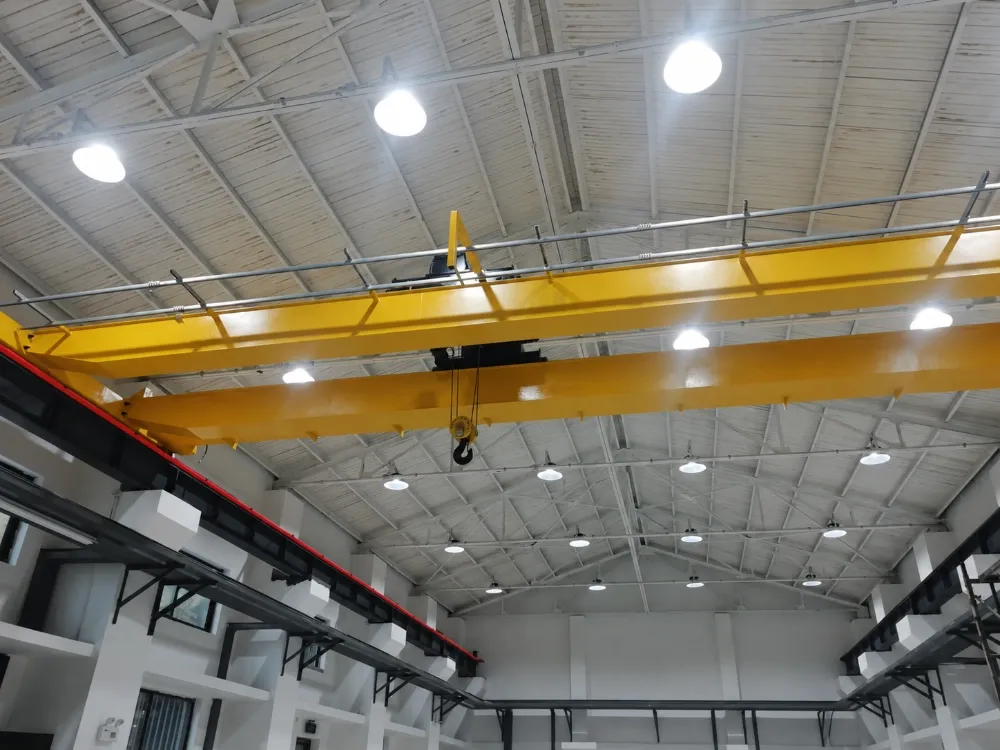
When planning a new manufacturing plant, many companies focus mainly on the initial price of the overhead crane. A traditional overhead crane may cost less at the beginning, but the purchase price is only one part of the total investment.
For factories with frequent lifting operations, such as mold factories, injection molding plants, steel processing workshops and machinery manufacturers, crane downtime can interrupt the entire production process.
A European overhead crane usually requires a higher initial investment. However, its compact structure, variable-frequency control, lower maintenance requirements and better space utilization can provide greater long-term value.
The Real Cost of an Overhead Crane Is More Than Its Purchase Price
When comparing crane quotations, factory owners should consider the total cost of ownership rather than only the equipment price.
The actual cost of an overhead crane may include:
- Initial crane purchase cost
- Factory construction and steel structure costs
- Electricity consumption
- Maintenance and spare-parts expenses
- Production losses caused by breakdowns
- Labor costs during equipment downtime
- Future repair and modernization costs
A cheaper crane may appear attractive during the purchasing stage. However, if it frequently requires maintenance or interrupts production, the final cost may be much higher.
Why Traditional Cranes Can Cause More Downtime
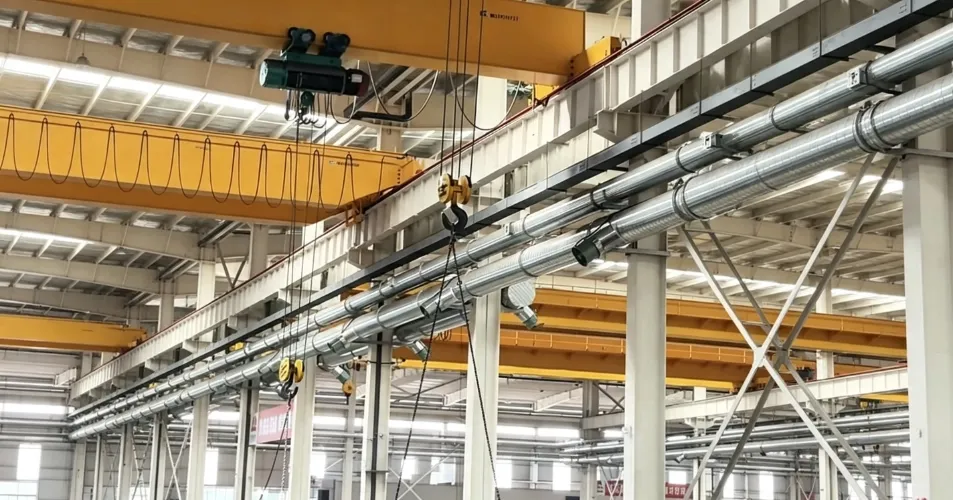
Some traditional overhead cranes use conventional motors without variable-frequency control. They start and stop suddenly, which can cause greater impact on the crane structure, gearbox, wheels, brakes and electrical components.
During frequent lifting operations, these repeated impacts may lead to:
- Faster wear of mechanical components
- Increased stress on the main girder and end carriages
- More load swinging during starting and braking
- Higher maintenance frequency
- Reduced positioning accuracy
- Unexpected production interruptions
For a workshop that uses the crane only occasionally, these disadvantages may be acceptable. But for a production line that depends on lifting equipment every day, even several hours of downtime can affect delivery schedules.
European Overhead Cranes Provide Smoother Operation
A European-style overhead crane normally uses variable-frequency drives for lifting and travelling movements.
Instead of starting or stopping immediately at full speed, the crane accelerates and decelerates smoothly. This helps reduce load swinging and mechanical impact.
The main benefits include:
- Smoother crane starting and braking
- More accurate load positioning
- Reduced wear on motors, brakes and gearboxes
- Lower impact on the factory runway structure
- Improved handling efficiency
- Better operation for molds and precision machinery
This is especially valuable when lifting expensive molds, machine tools, steel components or production equipment that must be positioned accurately.
Lower Headroom Can Reduce Factory Construction Costs
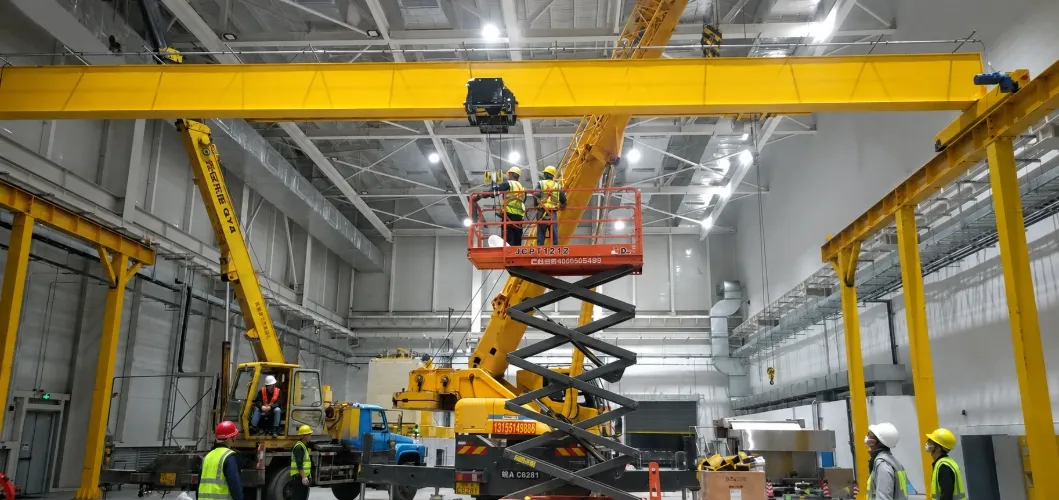
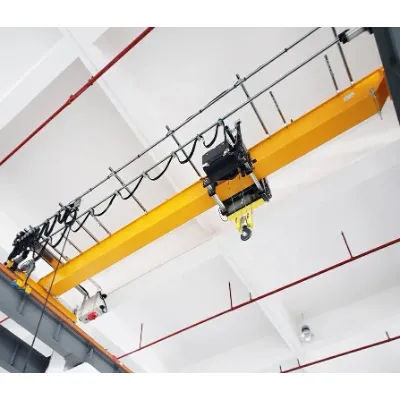
One of the most important advantages of a European overhead crane is its compact and low-headroom design.
A traditional crane and electric hoist may occupy more vertical space between the runway beam and the highest hook position. A European crane uses a more compact trolley or hoist arrangement, allowing the hook to travel closer to the roof.
This can provide two options during factory planning:
- Achieve a greater effective lifting height within the same building height.
- Reduce the required building height while maintaining the necessary hook height.
For a new factory, reducing the building height may help lower the cost of:
- Steel columns and roof structures
- Wall panels
- Building foundations
- Heating and ventilation
- Lighting and other supporting facilities
The actual savings depend on the crane capacity, span, lifting height and factory design. Therefore, the crane and workshop structure should be planned together before construction begins.
European Cranes Are Better Suited to Frequent Production
European overhead cranes are particularly suitable for factories where lifting equipment is closely connected to production.
Typical applications include:
- Mold handling in injection molding factories
- Machine-tool loading and maintenance
- Steel plate and structural steel handling
- Machinery assembly
- Equipment installation
- Warehouse material handling
- Production-line component transfer
In these applications, crane reliability affects more than the lifting operation itself. If the crane stops, workers, machines and the entire production process may also have to wait.
A reliable crane can therefore help protect production efficiency and delivery schedules.
Reduced Maintenance Does Not Mean No Maintenance
European cranes are designed to reduce wear and improve reliability, but they still require regular inspection and maintenance.
Important maintenance items include:
- Wire rope or chain condition
- Hook and safety latch
- Brake performance
- Wheels and runway alignment
- Electrical control system
- Gearbox lubrication
- Limit switches
- Bolts and structural connections
The crane maintenance schedule should be determined according to its working duty, operating environment and actual lifting frequency.
A properly selected and maintained crane will normally provide better long-term performance than an undersized crane operating continuously near its maximum capacity.
When Is a European Overhead Crane Worth the Investment?
A European overhead crane is worth considering when:
- The crane will operate frequently every day
- Production depends heavily on lifting equipment
- Loads require accurate positioning
- The factory has limited vertical space
- A new workshop is still in the design stage
- Maintenance downtime would cause significant losses
- Smooth and low-noise operation is important
- The company plans to use the crane for many years
A traditional crane may still be suitable for a small workshop with a limited budget, low lifting frequency and simple material-handling requirements.
The correct choice should be based on the working conditions rather than the purchase price alone.
Information Required for Crane Selection
Before selecting a European overhead crane, provide the following information to the crane supplier:
- Rated lifting capacity
- Crane span
- Required lifting height
- Factory length
- Daily operating hours
- Number of lifting cycles per hour
- Maximum and average load weight
- Type of material being lifted
- Indoor or outdoor environment
- Available runway beam height
- Local power supply
If the factory has not yet been constructed, drawings of the workshop should also be provided. This allows the crane supplier and steel structure designer to coordinate the runway elevation, roof clearance and hook height.
Conclusion
Choosing an overhead crane is not simply a comparison of initial prices.
For a new factory with frequent lifting operations, a European overhead crane can offer smoother movement, more efficient use of building space and lower long-term maintenance and downtime costs.
Although the initial investment may be higher, the total cost over the crane’s service life can be more economical—especially when production continuity and factory height are taken into account.
Planning the crane before the factory is built can also prevent costly structural modifications in the future.
Planning a new workshop? Send us your required capacity, span, lifting height and factory drawing. We can help you compare a European overhead crane with a traditional crane according to your actual working conditions.
Frequently Asked Questions
1. Is a European overhead crane more expensive?
European cranes normally have a higher initial price because they use compact lifting mechanisms, variable-frequency control and higher-level components. However, their long-term maintenance, downtime and building costs may be lower.
2. What is the main difference between a European crane and a traditional crane?
A European crane generally has a more compact structure, lower headroom, lighter self-weight and smoother variable-frequency operation. Traditional cranes usually have a simpler structure and lower initial price.
3. Can a European crane reduce factory construction costs?
It may reduce construction costs when the crane is planned before the factory is built. Its low-headroom design can provide the required hook height with a lower runway or building height. Actual savings must be calculated according to the workshop design.
4. Which factories are suitable for European overhead cranes?
They are commonly used in mold factories, injection molding plants, machinery workshops, steel processing plants, assembly facilities and other factories requiring frequent or accurate lifting.
5. Does a European crane require maintenance?
Yes. Every overhead crane requires regular inspection and preventive maintenance. European cranes can reduce wear and maintenance frequency, but they are not maintenance-free.
6. Should the crane be selected before designing a new factory?
Yes. It is better to confirm the crane capacity, span, lifting height and runway elevation during the early factory design stage. This helps avoid insufficient headroom and expensive structural modifications later.