Aug 25, 2026Buying Guide
Does a 16-Ton Overhead Crane Always Need a P43 Rail?
Does a 16-ton overhead crane require a P43 rail? Learn how wheel load, crane span, duty class, wheel quantity and runway support affect crane rail selection.
Does a 16-Ton Overhead Crane Always Need a P43 Rail?
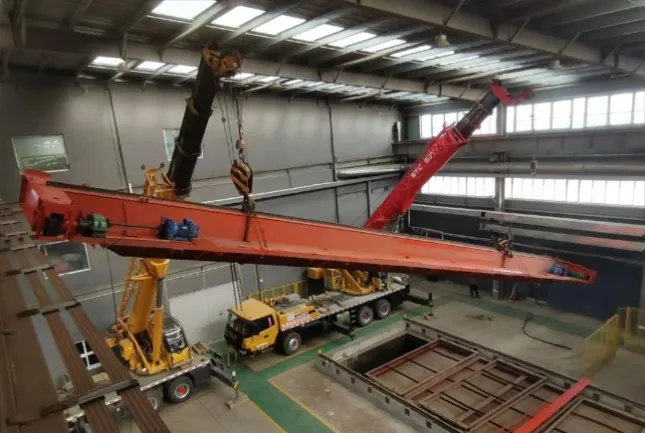
“Does a 16-ton overhead crane have to use a P43 rail?”
This is a common question when designing or purchasing an overhead crane. Some buyers assume that every crane capacity has a fixed corresponding rail size—for example, a 10-ton crane must use one rail model, while a 16-ton crane must use P43 rail.
However, crane rail selection is not that simple.
The rated lifting capacity is an important parameter, but it does not independently determine whether the crane should use P38, P43, QU70 or another rail specification. The correct selection must be based on the crane’s maximum wheel load, operating conditions and runway support system.
There Is No Simple “Crane Capacity Equals Rail Model” Rule
Crane standards and engineering design requirements do not normally select a runway rail solely according to the crane’s rated lifting capacity.
Two 16-ton overhead cranes can have the same lifting capacity but produce very different wheel loads.
This is because their designs and working conditions may differ in terms of:
- Crane span
- Total crane self-weight
- Trolley and hoist weight
- Number of crane wheels
- Wheel spacing
- Crane duty class
- Daily operating frequency
- Load distribution
- Dynamic impact
- Travelling speed
- Runway beam and foundation design
Therefore, one 16-ton crane may be suitable for a particular rail specification, while another 16-ton crane may require a heavier rail.
Selecting the rail directly from the crane tonnage can result in an unsuitable runway system.
Maximum Wheel Load Is a Key Selection Parameter
The maximum wheel load is one of the most important values in crane rail selection.
It represents the highest vertical load transferred from one crane wheel to the rail under the specified operating condition. It is affected by the lifted load, crane self-weight, trolley position and dynamic effects during operation.
For example, when the trolley approaches one end of the bridge, the wheels on that side usually carry a higher load than when the trolley is located near the middle.
The maximum wheel load therefore cannot be calculated from the rated capacity alone.
The crane manufacturer should provide relevant wheel-load data based on the final crane design. The runway designer or qualified engineer can then use this information to check the rail, rail fasteners, supporting beam and building structure.
Why Two 16-Ton Cranes May Need Different Rails
Consider two cranes with the same 16-ton rated lifting capacity.
The first crane has a shorter span, lighter self-weight, more wheels and relatively infrequent operation. Its load can be distributed across the runway more effectively.
The second crane has a longer span, heavier bridge structure, fewer wheels and a higher duty class. It works continuously in a steel processing or manufacturing plant.
Although both cranes can lift 16 tons, the second crane may create a considerably higher maximum wheel load and more frequent dynamic impact.
This is why it is unsafe to assume that the same rail specification will suit both cranes.
Factors That Affect Crane Rail Selection
1. Rated Lifting Capacity
The rated capacity affects the total load carried by the crane, but it is only the starting point for selection.
2. Crane Span
A longer span usually requires a larger and heavier main girder. The increased bridge weight can raise the crane wheel loads even when the lifting capacity remains unchanged.
3. Crane Self-Weight
The weight of the main girder, end carriages, trolley, hoist and electrical equipment is continuously transferred to the runway.
A heavy traditional double-girder crane and a lightweight European-style crane of the same capacity may not produce identical wheel loads.
4. Number of Wheels
The number and arrangement of wheels affect how the total load is distributed.
A crane with more wheels may distribute the load differently from a crane using only four wheels. However, wheel spacing and load distribution must also be checked; simply adding wheels does not automatically solve every runway problem.
5. Crane Duty Class
A crane used occasionally in a maintenance workshop experiences different operating conditions from a crane handling steel products throughout multiple shifts.
High-duty cranes normally experience more load cycles, braking forces and dynamic effects. These conditions must be considered when designing the runway system.
6. Operating Frequency
Frequent starting, braking and travelling can increase fatigue demands on the rails, fasteners and supporting beams.
Factories with continuous production should not select rails only according to the maximum static load.
7. Dynamic and Horizontal Forces
A crane runway is affected by more than vertical loads. Acceleration, braking, skewing and wheel-to-rail interaction can create horizontal and dynamic forces.
These forces should be included in the overall runway design.
8. Runway Beam and Foundation
The rail does not work independently. It forms part of a complete runway system that includes:
- Rail clips or fastening plates
- Rail pads, where required
- Steel or concrete runway beams
- Crane columns
- Bracing structures
- Building foundations
Even if the rail itself has sufficient capacity, an undersized supporting beam or poorly installed fastening system can still cause deformation, rail movement or crane travelling problems.
P38, P43 or QU70: Which Rail Should Be Used?
P38, P43 and QU70 are different rail specifications with different dimensions, section properties and applicable product standards.
A larger or heavier rail is not automatically the best choice. The selected rail must be compatible with:
- Maximum and minimum crane wheel loads
- Crane wheel diameter and tread profile
- Required rail-head width
- Runway beam design
- Rail fastening system
- Crane duty and operating environment
- Applicable local codes and project specifications
The final rail model should be determined after the crane parameters and site conditions have been confirmed.
Product names and dimensions can also vary between national standards and markets. Buyers should verify the actual rail dimensions, weight per meter, material grade, manufacturing standard and inspection documents instead of relying only on a commonly used model name.
What Information Is Needed Before Selecting a Crane Rail?
Before requesting a rail recommendation or quotation, prepare the following information:
- Crane type
- Rated lifting capacity
- Crane span
- Lifting height
- Crane self-weight
- Trolley or hoist weight
- Number of wheels
- Wheel diameter
- Wheel spacing
- Maximum wheel load
- Crane duty class
- Travelling speed
- Daily working hours
- Indoor or outdoor operation
- Runway beam drawings
- Required rail standard
- Installation and fastening method
If the maximum wheel load is not yet available, contact the crane manufacturer first. The rail supplier should not guess this value from the lifting capacity alone.
Crane Rail Quality Must Also Be Verified
After the correct rail specification has been determined, buyers should verify the quality of the actual product.
Important items include:
- Rail dimensions
- Weight per meter
- Material grade
- Straightness
- Surface condition
- Manufacturing tolerance
- Product standard
- Mill certificate
- Quality inspection documents
- Heat or batch identification
- Actual stock length
A rail carrying the expected model name may still be unsuitable if its material, dimensions or quality do not comply with the project requirements.
Common Crane Rail Selection Mistakes
Avoid the following mistakes when planning a crane runway:
- Selecting the rail only according to lifting capacity
- Ignoring the crane’s maximum wheel load
- Using another project’s rail model without calculation
- Considering the rail but ignoring the runway beam
- Failing to check wheel and rail-head compatibility
- Choosing a rail only because it is heavier
- Ignoring crane duty class and operating frequency
- Purchasing rails without material certificates
- Changing the crane design without rechecking wheel loads
These mistakes may result in excessive wear, rail deformation, loose fasteners, crane skewing or increased maintenance requirements.
Crane and Runway Should Be Designed Together
The crane, rail and supporting structure are parts of the same load-bearing system. They should be checked together during the early stage of a factory or runway project.
The recommended process is:
- Confirm the lifting capacity, span and operating conditions.
- Complete the preliminary crane design.
- Obtain the maximum wheel load and relevant horizontal forces.
- Check the rail specification and wheel compatibility.
- Design or verify the runway beam and supporting structure.
- Confirm the rail clips, joints and installation method.
- Verify the material and quality documents before purchasing.
This process is more reliable than selecting P38, P43 or QU70 from the crane capacity alone.
Conclusion
A 16-ton overhead crane does not automatically require a P43 rail.
Even with the same rated capacity, differences in span, crane self-weight, number of wheels, duty class and operating frequency can produce significantly different maximum wheel loads.
Before deciding between P38, P43, QU70 or another specification, confirm the crane design and actual working conditions. The final selection should be checked by the crane manufacturer, runway designer or qualified engineer according to the applicable standards.
Once the engineering requirements are clear, the rail supplier can help verify the specification, dimensions, material grade, quality certificates and available stock.
If you need a crane rail quotation, send us the crane capacity, span, maximum wheel load, number of wheels and runway drawing. We can help you check the required rail specification and available supply.
Frequently Asked Questions
1. Does every 16-ton overhead crane use P43 rail?
No. The correct rail depends on the crane’s maximum wheel load, span, self-weight, wheel arrangement, duty class and runway design. Rated capacity alone is insufficient.
2. Can crane rail be selected only according to lifting capacity?
No. Lifting capacity is only one input. Maximum wheel load and actual operating conditions are more important for the final engineering check.
3. What is the maximum wheel load of an overhead crane?
It is the highest vertical load transferred from an individual crane wheel to the runway under a specified operating condition. It should be provided or calculated by the crane manufacturer.
4. Is a heavier crane rail always safer?
Not necessarily. A rail must match the crane wheels, fastening system, runway beam and project requirements. Installing a heavier rail does not correct an inadequate beam or an incorrect runway design.
5. What documents should be checked when buying crane rails?
Check the applicable product standard, dimensions, weight per meter, material grade, mill certificate, inspection documents and batch identification.
6. Who should determine the final crane rail size?
The crane manufacturer, runway designer or qualified engineer should determine or verify it based on wheel loads, working conditions, supporting structures and applicable standards.