Aug 28, 2026Maintenance
Can Gantry Crane Legs Be Extended Safely?
Can you increase gantry crane leg height? Learn when crane legs can be extended, what safety checks are required, and why the main girder should not be modified without engineering approval.
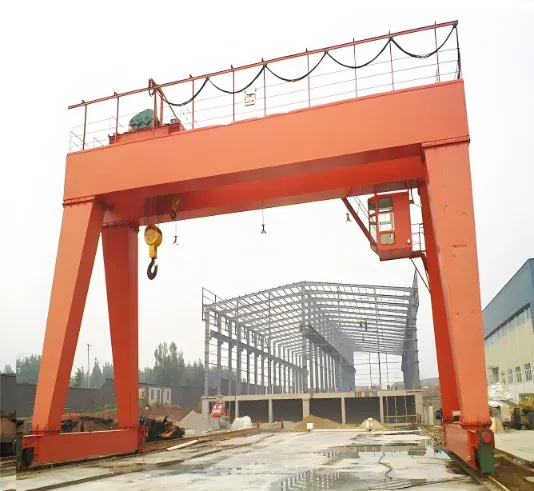
Can Gantry Crane Legs Be Extended Safely?
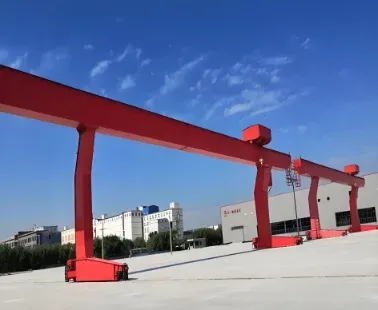
When the lifting height of a gantry crane is insufficient, some owners consider adding an extension section to the supporting legs. However, one important question must be answered first:
Will extending the legs reduce the strength or service life of the gantry crane?
The short answer is: gantry crane legs may be extended, but only after professional structural assessment and engineering approval.
A properly designed extension can increase the available lifting height without significantly affecting normal operation. However, welding an extra section onto the legs without calculation may reduce stability and create serious safety risks.
Why Would a Gantry Crane Need Higher Legs?
The original crane height may become insufficient because of changes in production or site conditions. Common reasons include:
- Taller equipment has been installed under the crane.
- The customer needs to lift goods onto a higher truck.
- The height of the materials being handled has increased.
- The original crane dimensions were measured incorrectly.
- The workshop layout or working process has changed.
In these situations, extending the supporting legs may be more economical than replacing the complete gantry crane.
However, the modification must be evaluated according to the crane capacity, span, leg structure, operating environment and required extension height.
A 3-Ton Small Gantry Crane Leg Extension Example
One of our small gantry cranes had the following original specifications:
- Lifting capacity: 3 tons
- Crane span: 11 meters
- Original leg height: More than 3 meters
- Required lifting height after modification: More than 4 meters
After installation planning, the original height was found to be insufficient for the customer’s operation. An engineered extension section was therefore added above the ground beam.
Steel plates compatible with the original structure were used, while reinforced plates and properly designed welds were added at the connection position. After checking alignment, structural stability and crane operation, the additional height met the customer’s lifting requirements.
This example shows that a small gantry crane can sometimes be raised safely. However, the same modification method cannot be copied directly to every crane.
What Must Be Checked Before Extending Gantry Crane Legs?
Increasing the height changes the crane’s overall geometry and may increase the forces acting on its supporting structure. The following factors must therefore be checked before modification.
1. Crane Lifting Capacity
A 3-ton light-duty gantry crane and a 30-ton heavy-duty gantry crane have completely different structural requirements.
The crane’s rated capacity, dead weight and maximum wheel load must be included in the structural calculation.
2. Crane Span
A longer span normally creates greater bending stress and deformation. The relationship between the crane span and the new leg height must be evaluated instead of considering only the extension section.
3. Required Extension Height
Adding a short engineered section may be practical, while a large increase in height could require complete replacement of the legs.
The greater the crane height, the more attention must be paid to lateral stability, bracing and overturning risk.
4. Existing Leg Condition
Before welding or installing an extension section, the existing legs should be inspected for:
- Corrosion
- Cracks
- Previous repairs
- Permanent deformation
- Thin or damaged steel plates
- Defective welds
An extension should not be connected directly to a damaged supporting structure.
5. Working Environment
Indoor and outdoor gantry cranes face different operating conditions. For outdoor cranes, wind load is especially important because increasing the height may increase overturning forces.
Local wind, seismic and applicable crane standards should be included in the engineering assessment.
6. Ground Beam, Wheels and Foundation
Extending the legs does not affect only the upper structure. Engineers should also check:
- Ground beam strength
- Wheel loads
- Rail condition
- Foundation capacity
- Crane travel stability
- Anti-wind devices for outdoor cranes
If the foundation or ground beam cannot support the modified structure, increasing the leg height may not be safe.
How Should Gantry Crane Legs Be Extended?
The actual design depends on the crane structure, but a professional modification normally includes the following steps:
- Record the original crane specifications and dimensions.
- Inspect the main girder, legs, ground beams and welds.
- Calculate the loads and stability of the modified crane.
- Design the extension section and reinforcement plates.
- Select steel with a suitable grade and thickness.
- Cut and weld according to an approved procedure.
- Check leg verticality, crane span and wheel alignment.
- Inspect the welds using an appropriate testing method.
- Complete electrical and limit-switch adjustments if necessary.
- Perform required commissioning and load tests.
The crane should not return to service until the modification has been inspected and accepted by qualified personnel under applicable local requirements.
Will Extending the Legs Affect Crane Service Life?
A professionally designed modification does not automatically shorten the service life of a gantry crane.
Service life depends on several factors, including:
- Structural calculations
- Steel grade and thickness
- Connection design
- Welding quality
- Corrosion protection
- Crane duty class
- Maintenance frequency
- Actual lifting loads
If unsuitable steel is used, the welds are poorly executed or the crane becomes unstable after being raised, its reliability and service life can be seriously affected.
Therefore, owners should never judge the modification only by whether the extension “looks strong.”
Why Should the Main Girder Not Be Extended Privately?
Increasing the leg height and increasing the main girder span are two different modifications.
The main girder is the primary load-bearing component of a gantry crane. Its capacity is closely related to:
- Girder length
- Cross-sectional dimensions
- Steel thickness
- Designed camber
- Weld arrangement
- Crane capacity
- Trolley or hoist position
- Allowable deflection
Privately adding another section to the main girder can change the entire load path. Possible consequences include excessive deflection, unstable crane travel, weld cracking and permanent deformation.
For this reason, the main girder should never be lengthened without complete engineering calculations and approval from a qualified crane professional.
In some cases, replacing the complete main girder or selecting a new crane may be safer and more economical.
Information Required for a Gantry Crane Modification
To evaluate whether a crane can be raised, provide the supplier or engineer with:
- Rated lifting capacity
- Crane span
- Current total height
- Current lifting height
- Required new lifting height
- Indoor or outdoor installation
- Crane duty class
- Main girder and leg dimensions
- Photos of the complete crane
- Photos of the leg and ground-beam connections
- Rail and foundation information
- Crane drawings, if available
The more complete the information is, the more accurate the modification proposal will be.
Conclusion
Gantry crane legs can sometimes be extended to increase lifting height, but the modification must not be treated as a simple welding job.
The crane structure, stability, wind load, wheel load, foundation and connection strength must all be checked. When the design is verified and the work is completed by qualified personnel, leg extension may be a practical solution.
However, never extend the legs or main girder without professional evaluation. If the required dimensional change is too large, manufacturing new legs or replacing the crane may be the safer choice.
Need help checking whether your gantry crane can be raised? Send us the crane capacity, span, current height, required height and site photos for an initial technical evaluation.
Frequently Asked Questions
1. Can the legs of an existing gantry crane be extended?
Yes, some gantry crane legs can be extended after structural calculations and professional inspection. The feasibility depends on the crane capacity, span, existing condition and required additional height.
2. Does increasing the leg height reduce crane capacity?
Not necessarily, but the rated capacity must not be assumed to remain unchanged. An engineer should verify structural strength, lateral stability, wheel loads and foundation capacity before confirming the allowable capacity.
3. Can extension sections be welded directly onto the crane legs?
Direct welding without an approved design is not recommended. The connection may require reinforced plates, specific welding procedures and nondestructive testing.
4. Is it safe to raise an outdoor gantry crane?
It may be possible, but wind load and overturning stability become especially important. The modified crane may require additional bracing, rail clamps or anchoring devices.
5. Can the main girder also be lengthened?
The main girder should not be privately lengthened. Changing its span affects strength, camber and deflection. A complete engineering assessment is required, and replacement may be safer.
6. Should the crane be tested after modification?
Yes. The modified crane should undergo inspection, commissioning and applicable load testing before it returns to service.