Aug 20, 2026Buying Guide
Can Multiple Gantry Cranes Share the Same Runway? Design & Safety Guide
Can two or more gantry cranes share the same runway? Learn when a shared crane runway can save foundation costs, when separate tracks are better, and what anti-collision systems are required.
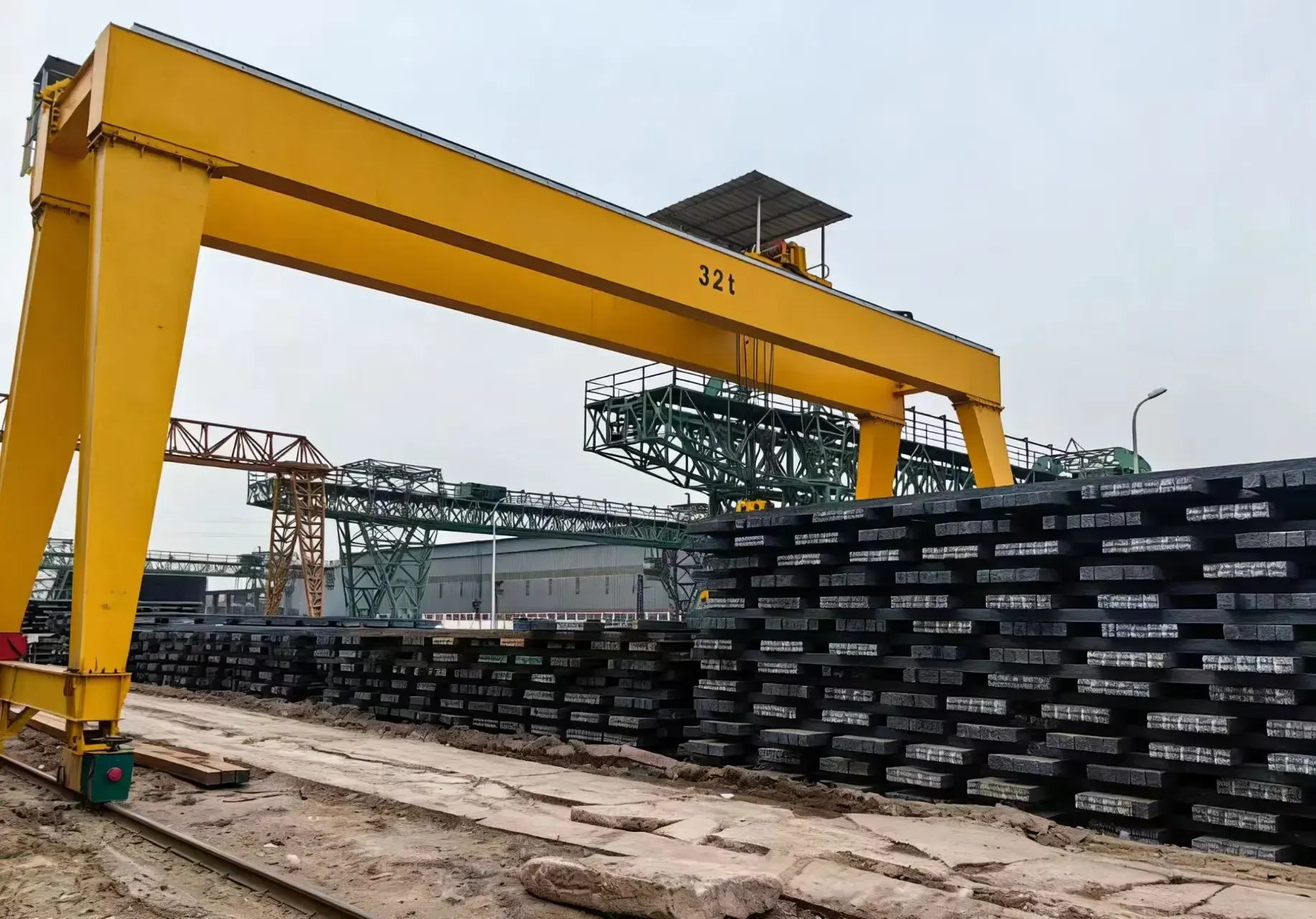
Can Two Gantry Cranes Use the Same Runway?
Yes.
Two or more gantry cranes can operate on the same runway in some applications.
For factories and material yards with limited space, installing several smaller gantry cranes on one properly designed runway can improve space utilization and reduce the amount of separate rail foundation construction.
However, you cannot simply add another crane to an existing runway.
The runway, rail foundation, electrical system and safety devices must be checked according to the actual crane capacities and operating conditions.
Why Use a Shared Gantry Crane Runway?
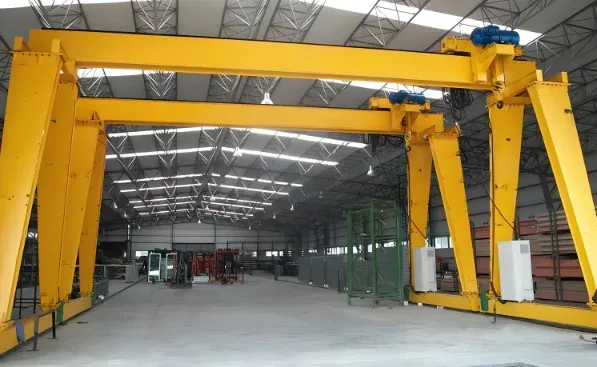
The biggest advantages are space utilization and infrastructure cost.
For example, a workshop or outdoor material yard may need two small gantry cranes to serve different working areas.
Instead of constructing two completely separate runway systems, both cranes may be installed on the same rail line.
This can help reduce:
- Concrete foundation construction
- Rail installation
- Site preparation
- Construction time
- Space occupied by separate crane runways
For small and medium-capacity cranes, this can be an economical solution when the operating areas overlap.
The Runway Must Be Designed for Multiple Cranes
This is the most important point.
An existing runway designed for one crane should not automatically be assumed to support two cranes.
When multiple gantry cranes share the same runway, the designer needs to consider the combined operating conditions.
Important factors include:
Crane Capacity
A 3 ton + 3 ton crane system is very different from two 20 ton gantry cranes.
Wheel Loads
The runway and foundation must withstand the maximum wheel loads under the required operating conditions.
Crane Self-Weight
The weight of the crane itself also acts on the runway foundation.
Dynamic Loads
Starting, stopping and travelling generate additional forces.
Crane Position
The design should consider possible operating positions of both cranes, including unfavorable loading conditions.
Therefore, before adding another crane to an existing runway, the runway capacity and foundation should be checked.
Anti-Collision Protection Is Very Important
When two gantry cranes operate on the same runway, they can travel toward each other.
This creates a collision risk.
For this reason, a shared runway should have appropriate anti-collision protection.
Depending on the crane design, the system may include:
- Travel limit switches
- Mechanical buffers
- Photoelectric sensors
- Laser or proximity sensors
- Automatic deceleration
- Automatic travel stop
A more advanced anti-collision system can detect another crane approaching, reduce travel speed and stop the crane before contact occurs.
Operators should not rely only on visual judgment to prevent collisions.
[Internal Link: Gantry Crane Anti-Collision System]
Don't Forget the End Stops
Anti-collision protection between cranes is only one part of the safety system.
Both ends of the runway should also have suitable end stops or buffers to prevent the crane from travelling beyond the designed runway.
Therefore, a multi-crane runway normally needs to consider two different risks:
Crane ↔ Crane Collision
and
Crane ↔ Runway End Collision
Both should be considered during the design stage.
When Is a Shared Runway a Good Choice?
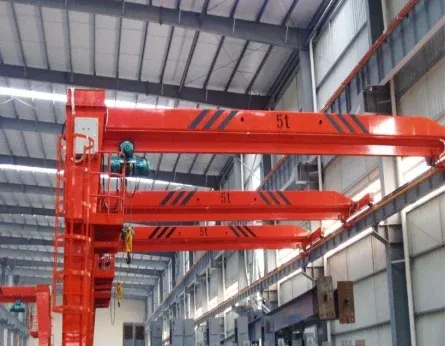
A shared runway can be considered when:
- The site has limited space
- Two or more small or medium gantry cranes are required
- The cranes serve the same production or storage area
- Crane operating frequency is moderate
- The runway and foundation are designed for multiple cranes
- Suitable anti-collision protection can be installed
For example, a fabrication workshop may use one crane for material handling and another for equipment assembly.
If their working areas are connected, sharing one runway may reduce unnecessary foundation construction.
When Are Separate Runways Better?
For heavy-duty applications, independent crane runways may be a better solution.
This is especially worth considering when:
- Crane capacities are large
- Heavy loads are handled frequently
- Both cranes need to operate simultaneously
- Production efficiency is very important
- Crane traffic is frequent
- One crane should not interfere with another
- The working areas can be clearly separated
Heavy-duty gantry cranes produce larger wheel loads and dynamic forces.
Using independent runways can simplify operating coordination and allow each crane to work in its own area without waiting for another crane.
For steel yards, precast concrete plants, heavy machinery factories and other intensive lifting applications, this can provide better operational efficiency.
Shared Runway vs Separate Runway
Item | Shared Runway | Separate Runways |
|---|---|---|
Foundation Cost | Lower in suitable projects | Higher |
Space Requirement | Lower | Higher |
Crane Interference | Possible | Low |
Anti-Collision System | Important | Usually simpler |
Operating Flexibility | Moderate | High |
Heavy-Duty Applications | Requires careful engineering | Often preferred |
Simultaneous Operation | May affect efficiency | Easier |
There is no single solution suitable for every project.
The final decision should be based on crane capacity, wheel loads, operating frequency, site dimensions and production requirements.
Example: Two Small Gantry Cranes in One Workshop
Suppose a workshop needs:
Crane 1: 5 ton gantry crane
Crane 2: 5 ton gantry crane
Working area: Same production bay
Operating frequency: Moderate
A shared runway may be considered.
Before finalizing the design, the supplier should check:
- Maximum crane wheel loads
- Rail specifications
- Concrete foundation capacity
- Runway length
- Crane stopping distance
- Anti-collision system
- Electrical power supply
- Required working zones
If all conditions are suitable, one runway can serve both cranes and reduce unnecessary civil construction.
What Information Should You Send to the Crane Supplier?
If you are considering multiple gantry cranes on one runway, provide:
Crane quantity: ___ units
Capacity of each crane: ___ tons
Span: ___ meters
Lifting height: ___ meters
Runway length: ___ meters
Working hours per day: ___
Material to be lifted: ___
Maximum load weight: ___
Indoor or outdoor: ___
It is also highly recommended to provide a site drawing or simple layout sketch showing where each crane needs to work.
This helps the crane supplier determine whether a shared runway or independent runway is more suitable.
FAQ
1. Can two gantry cranes run on the same rail?
Yes. Two gantry cranes can operate on the same runway if the runway, rail foundation and safety systems are designed for multi-crane operation.
2. Is a shared gantry crane runway cheaper?
It can reduce civil construction and rail installation costs because multiple cranes use the same runway infrastructure. However, additional anti-collision and control systems may be required.
3. Do two cranes on the same runway need anti-collision devices?
Anti-collision protection is very important when multiple cranes operate on the same runway. Depending on the application, this may include buffers, limit switches, proximity sensors or automatic deceleration and stopping systems.
4. Can I add a second gantry crane to my existing runway?
Possibly, but the existing runway should first be checked for rail condition, foundation capacity, wheel loads and the additional crane load. Do not assume that a runway designed for one crane can automatically support two.
5. Should heavy-duty gantry cranes share one runway?
They can in properly engineered systems, but for high-capacity and high-frequency lifting applications, separate runways may provide better operational independence and efficiency.
Conclusion
Multiple gantry cranes can share one runway, but the runway must be designed as a complete system.
For small and medium cranes in space-limited factories or material yards, a shared runway can help reduce foundation construction and improve space utilization.
For heavy-duty and high-frequency operations, independent runways may provide better efficiency and reduce interference between cranes.
Most importantly:
Never install a second crane on an existing runway without checking the runway and foundation capacity, and always consider suitable anti-collision protection.