Aug 17, 2026Maintenance
Crane Girder Deflection: Causes, Risks and Safety Checks
Learn what crane girder deflection is, why an overhead crane beam bends, the difference between elastic and permanent deflection, and when to stop operation.
What Is Crane Girder Deflection and Why Is It Dangerous?
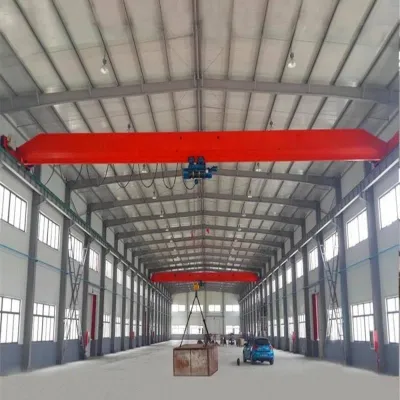
Some factory owners report that the main girder of their single girder overhead crane begins to bend downward after only two or three years of operation.
Is every downward movement dangerous?
Not necessarily. A crane girder normally bends slightly when lifting a load. The key question is whether it returns to its original position after the load is removed.
If the girder does not recover, the crane may have permanent structural deformation and should not continue operating until it has been inspected by a qualified crane engineer.
What Is Crane Girder Deflection?
Crane girder deflection is the vertical downward movement of the main girder when the crane lifts a load.
The largest deflection normally appears near the middle of the crane span.
When the crane is empty, the girder may look straight. After a load is lifted, the center of the beam moves downward. The distance of this movement is called the girder deflection value.
However, crane deflection can be divided into two very different conditions:
- Elastic deflection
- Permanent deflection
Understanding the difference is important for crane safety.
1. Elastic Deflection: Normal Movement Under Load
Elastic deflection means that the girder bends slightly while carrying a load but returns to its original position after the load is removed.
The process is:
Load applied → girder bends downward → load removed → girder returns
This is a normal response of a steel structure, provided that the measured deflection remains within the allowable limit specified by the crane design, manufacturer and applicable local standard.
Elastic deflection does not automatically mean the crane is damaged.
2. Permanent Deflection: A Serious Structural Problem
Permanent deflection means that the main girder remains bent after the load has been completely removed.
The process is:
Load applied → girder bends downward → load removed → girder does not return
This condition is also called permanent deformation or plastic deformation.
It can indicate that the steel structure has exceeded its elastic range or that the girder, welds or connections have suffered structural damage.
If permanent deformation is found:
- Stop crane operation.
- Isolate the working area.
- Do not perform another load test without an approved procedure.
- Arrange an inspection by the manufacturer or a qualified crane engineer.
- Check the girder, welds, end connections, hoist runway and electrical drive system.
Deformed or cracked structural members must be properly evaluated and repaired or replaced as necessary. OSHA also requires periodic crane inspections for cracked and deformed components. (OSHA overhead and gantry crane requirements)
Why Does a Crane Main Girder Develop Permanent Deflection?
1. Repeated Overloading
Overloading is one of the most common causes.
For example, using a 5-ton crane to lift 7 or 8 tons can place excessive stress on the main girder. Even if the crane does not fail immediately, repeated overloading can cause permanent deformation and fatigue damage.
Never use the crane above its rated capacity.
2. Impact and Shock Loading
A crane may experience a force much higher than the actual weight of the load when:
- The load is lifted suddenly.
- The operator starts or stops too quickly.
- A suspended load falls and is caught by the hoist.
- The crane is used for load turning without a suitable lifting plan.
- The load becomes stuck and is pulled free suddenly.
A 5-ton object can generate forces much higher than 5 tons during severe impact loading.
3. Incorrect Girder Design
The girder section, steel thickness and reinforcement must match the crane’s:
- Rated capacity
- Span
- Working duty
- Lifting frequency
- Operating environment
- Dynamic loading conditions
A lightly designed girder may perform normally during occasional operation but develop excessive deflection under frequent or heavy-duty use.
This is why crane selection should not be based only on lifting capacity and price.
Internal link: [How to Choose the Correct Crane Working Duty]
4. Insufficient Steel or Poor Manufacturing Quality
An undersized web plate, thin flange plate, poor welding quality or incorrect material grade can reduce girder stiffness and strength.
Possible manufacturing problems include:
- Insufficient plate thickness
- Incorrect steel grade
- Poor weld penetration
- Uncontrolled welding deformation
- Missing or incorrectly positioned stiffeners
- Incorrect girder geometry
- Poor-quality repair welding
5. Incorrect Crane Working Duty
Two factories may both use a 5-ton crane, but their operating conditions can be completely different.
One crane may lift two or three loads per day. Another may lift loads hundreds of times during each shift.
If a light-duty crane is used for continuous production, fatigue and structural deformation may develop much earlier.
Internal link: [Crane Working Class Explained: A1–A8]
6. Side Pulling and Diagonal Lifting
An overhead crane is designed mainly for vertical lifting.
Dragging a load sideways or lifting at an angle creates additional horizontal forces. These forces can affect the main girder, hoist trolley, end carriages, wheels and runway system.
7. Corrosion and Poor Maintenance
In coastal areas, chemical plants, humid workshops and outdoor sites, corrosion can reduce the effective thickness of structural steel.
This is especially important for cranes operating in Southeast Asia and many coastal regions of Africa, where high humidity, rain and salt exposure may accelerate corrosion.
Regularly inspect:
- Girder web and flange plates
- Welded joints
- End connections
- Drainage areas
- Areas where water or dust collects
- Previously repaired sections
What Are the Risks of Excessive Girder Deflection?
Excessive or permanent deflection can lead to several serious problems.
Abnormal Hoist Trolley Movement
A deformed beam can create an uneven running surface. Depending on the crane design, the hoist trolley may:
- Travel with increased resistance
- Move unevenly
- Wear its wheels abnormally
- Drift toward a lower section
- Produce unusual noise or vibration
Motor Overload and Overheating
When the trolley or crane wheels cannot run smoothly, the travel motor needs more force.
This can cause:
- High motor current
- Motor overheating
- Frequent overload protection
- Reducer and bearing wear
- Shorter motor service life
Cracks in Welds and Structural Parts
Permanent deformation changes the original force distribution of the girder. Repeated loading may then create fatigue cracks near:
- Flange welds
- Web plate welds
- Stiffeners
- End connections
- Previous repair areas
Load Positioning Problems
An uneven girder may make accurate load positioning more difficult. The suspended load can swing or the trolley may not stop where expected.
This creates additional risks for operators, equipment and nearby workers.
Risk of Structural Failure
Severe permanent deformation, especially when combined with cracks, corrosion or repeated overloading, can eventually reduce the structural capacity of the crane.
In extreme cases, it may lead to local buckling, weld failure or girder failure.
Why Do New Crane Girders Have Upward Camber?
Many overhead crane girders are manufactured with a small upward curve called camber.
The purpose of camber is to compensate for part of the downward movement caused by:
- The girder’s own weight
- The hoist and trolley weight
- The rated lifting load
The required camber depends on the crane design, span, duty class and applicable standard. It should be confirmed from the approved crane drawings and manufacturer’s technical documents.
Camber must not be added or modified by unapproved heating or welding because this can introduce residual stress and further structural damage.
Warning Signs Factory Owners Should Not Ignore
Stop and arrange an inspection if you notice:
- The girder remains bent when the crane is unloaded.
- The downward movement is increasing over time.
- The hoist trolley moves by itself on the beam.
- The trolley frequently jams or travels unevenly.
- Wheels show unusual or uneven wear.
- The travel motor frequently overheats or trips.
- Cracks appear around welds or stiffeners.
- The crane produces new vibration or abnormal noise.
- Paint cracks repeatedly in the same structural area.
- The crane has recently been overloaded or subjected to a major impact.
Paint cracking alone does not confirm structural failure, but it can be a warning sign that requires further inspection.
How Should Girder Deflection Be Checked?
Do not judge girder deflection only by looking at the crane from the floor.
A proper inspection should normally include:
- Confirming the crane is unloaded and safely isolated.
- Establishing accurate reference points.
- Measuring the unloaded girder profile.
- Measuring deflection under a controlled test load when permitted.
- Removing the load and checking whether the girder returns.
- Comparing the results with the approved design and applicable standard.
- Inspecting welds, connections, wheels and the runway system.
- Recording all measurements for future comparison.
The exact allowable deflection cannot be decided from lifting capacity alone. It depends on the crane type, span, design standard, working duty and manufacturer’s specifications.
Never conduct an overload or improvised load test without a qualified person and an approved testing procedure.
Can a Permanently Deflected Girder Be Repaired?
Sometimes it can be repaired, but not by simply heating the beam and pulling it upward.
A safe repair requires:
- Structural calculations
- Material and weld inspection
- Identification of the original cause
- An approved repair procedure
- Qualified welding personnel
- Non-destructive testing when required
- Alignment and load testing after repair
If the damage is severe, replacing the main girder may be safer and more economical than repairing it.
After any repair, the crane should not return to service until it has passed the required inspection and testing.
How Can Girder Deflection Be Prevented?
Factory owners can reduce the risk by following these rules:
- Never exceed the rated crane capacity.
- Avoid sudden lifting, braking and impact loading.
- Do not drag loads sideways.
- Select the correct crane working duty.
- Leave a reasonable safety margin when choosing capacity.
- Inspect the crane structure and welds regularly.
- Protect outdoor and coastal cranes against corrosion.
- Record deflection measurements during periodic inspections.
- Buy cranes with complete design documents and material information.
- Ask the supplier about girder design, camber and load testing.
Conclusion
A crane girder bending slightly under load is not always a fault. If it returns to its original position after unloading and remains within the approved limit, it is normally elastic deflection.
The dangerous condition is permanent deflection.
If the main girder remains bent after unloading, stop using the crane and arrange a professional inspection. Continuing operation without evaluating the girder, welds and connections can increase the risk of drive failure, structural cracking and serious accidents.
Frequently Asked Questions
1. Is it normal for an overhead crane girder to bend under load?
A small amount of elastic deflection can be normal. The girder should return after unloading, and the measured value must remain within the crane’s approved design limit.
2. How can I identify permanent girder deflection?
Remove the load and measure the girder using established reference points. If it does not return to its approved unloaded profile, permanent deformation may be present.
3. Can I continue using a crane with a bent main girder?
Do not continue normal operation if permanent deformation is suspected. Stop the crane and ask the manufacturer or a qualified crane engineer to inspect it.
4. Does every new crane require upward camber?
Camber is commonly incorporated into crane girder design, but its required value depends on the crane type, span, duty and applicable design standard. Refer to the approved drawings.
5. Can heating straighten a deformed crane girder?
Heating or welding without an engineered repair procedure can change the steel properties and introduce residual stress. Any straightening work must follow an approved structural repair plan.
6. Why did my crane girder deform after only two years?
Possible causes include overloading, impact loading, incorrect duty selection, inadequate girder stiffness, manufacturing defects, corrosion or poor operating practices. An inspection is required to determine the actual cause.
7. How often should the crane structure be inspected?
The interval should follow local regulations, the manufacturer’s instructions and the crane’s service conditions. Heavy-duty cranes and cranes operating in corrosive environments normally require more frequent inspection.