Aug 10, 2026Buying Guide
Do You Need a KBK Crane? 3 Signs Your Workshop Needs One
Not sure whether your workshop needs a KBK crane? Learn 3 common material handling problems that show when a KBK workstation crane can save time, labor and floor space.
Do You Need a KBK Crane? 3 Signs Your Workshop Needs One
Many factory owners ask:
"Does my workshop really need a KBK crane?"
The answer depends on your material handling problems.
If workers frequently move heavy parts by hand, forklifts block production routes, or semi-finished products are piled everywhere, a KBK crane may be worth considering.
A simple rule is:
If you have even one of these problems regularly, it is time to evaluate a KBK crane.
If you have two or three problems at the same time, continuing to rely only on manual handling or forklifts may be costing your factory more than you realize.
What Is a KBK Crane?
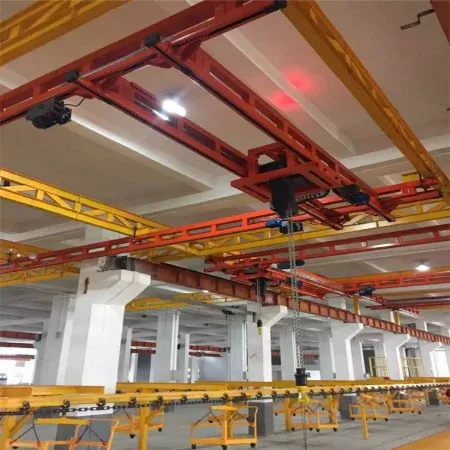
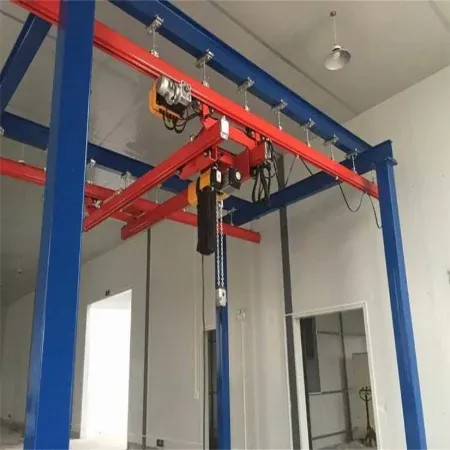
A KBK crane is a flexible workstation crane system designed for material handling inside workshops and production areas.
Unlike a traditional overhead crane, a KBK system usually consists of modular rails and suspension components installed above the working area.
The lifting equipment can move along the KBK rail and deliver materials directly to different workstations.
This makes KBK cranes particularly useful for:
- Assembly workshops
- Machinery factories
- Auto parts production
- Welding workshops
- Small manufacturing plants
- Warehouses
- Production lines
- Workstations requiring frequent lifting
The biggest advantage is simple:
The lifting equipment comes to the worker instead of the worker constantly moving the material.
3 Signs Your Workshop May Need a KBK Crane
1. Workers Frequently Complain About Back Pain
This is one of the clearest signs.
If workers regularly carry or push heavy components manually, the problem is not only physical fatigue.
It can also affect:
- Work efficiency
- Worker safety
- Absenteeism
- Labor costs
- Production consistency
Imagine a worker repeatedly moving 50 kg, 100 kg or even several hundred kilograms of components during a working day.
Even when each individual movement seems manageable, repeated manual handling can create significant physical strain.
A KBK crane can transfer the load from the worker to the lifting system.
The operator mainly controls the lifting and movement rather than carrying the load.
The result?
Less manual handling and easier material movement between workstations.
For factories where workers repeatedly move components, this can make a significant difference to daily productivity.
2. Forklifts Block the Workshop or Workers Keep Waiting for the Crane
Another common problem is transportation congestion.
You may have experienced this situation:
A worker needs one component.
The component is located in another area.
The forklift is busy.
The main overhead crane is being used by another team.
So the worker waits.
Five minutes later, the forklift arrives.
Then another worker needs it.
The process repeats.
A few minutes of waiting may not seem important.
But over hundreds of working days, the lost time can become a significant operating cost.
KBK provides a different solution
A KBK crane can be installed directly above production areas and workstations.
Instead of moving a forklift through the workshop every time a component needs to be transferred, the operator can move the load along the overhead KBK rail.
This can help reduce:
- Forklift traffic
- Material handling distance
- Waiting time
- Workshop congestion
- Unnecessary transportation
For production lines with frequent short-distance lifting, this is one of the main advantages of a workstation crane system.
3. Semi-Finished Products Are Piled Everywhere
This problem is easy to overlook.
When material handling is inconvenient, workers often place components wherever there is available space.
After some time, the workshop becomes crowded.
You may see:
- Components on the floor
- Materials blocking aisles
- Semi-finished products mixed together
- Difficult-to-access storage areas
- Workers spending time searching for parts
The problem is not necessarily a lack of storage space.
Sometimes the real problem is:
Material cannot be moved efficiently.
A KBK crane can create a more organized material flow between storage, assembly and production areas.
Instead of manually carrying components across the workshop, materials can be lifted and moved along predefined overhead routes.
This can help improve workplace organization and reduce unnecessary movement.
Why Choose a KBK Crane Instead of a Traditional Overhead Crane?
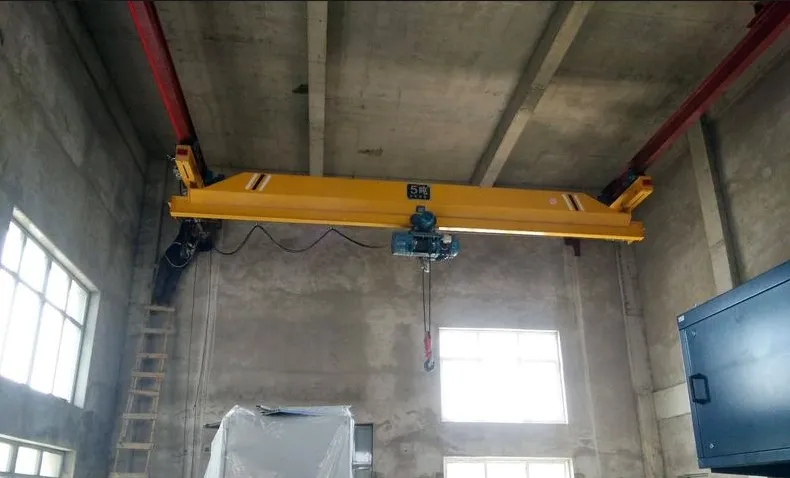
A traditional overhead crane is often designed to cover a larger workshop area.
It is an excellent solution for heavier loads and larger lifting operations.
But not every lifting task requires a large overhead crane.
For example:
- A worker needs to move a motor from one workstation to another.
- An operator needs to lift a component onto an assembly table.
- A production line needs frequent short-distance material movement.
- Several workstations need independent lifting access.
For these applications, a KBK workstation crane can be more flexible.
KBK Crane
Best suited for:
- Frequent workstation lifting
- Light and medium loads
- Short-distance material handling
- Production lines
- Assembly areas
- Flexible layouts
Traditional Overhead Crane
Often better suited for:
- Larger workshop coverage
- Heavy loads
- Long-distance movement
- General workshop material handling
- Heavy industrial applications
The choice should therefore depend on the actual workflow, not simply on the lifting capacity.
Does a KBK Crane Save Floor Space?
One major advantage of a KBK crane system is that the lifting equipment works above the production area.
The floor remains available for:
- Workers
- Production equipment
- Storage
- Forklifts
- Material transportation
This is especially useful for workshops where floor space is limited.
Instead of adding more floor-level transportation equipment, you can use the overhead space to create a material handling route.
In simple terms:
Use the space above your production line instead of occupying more floor space.
Can One Worker Operate a KBK Crane?
In many suitable applications, yes.
KBK systems are designed to make material handling easier for operators.
Depending on the equipment configuration, an operator can control lifting and horizontal movement without manually carrying the load.
For example, a worker can move a component from:
Storage → Workstation → Assembly Table → Next Process
with much less manual handling.
This is particularly useful for repetitive production tasks.
However, the actual lifting capacity, operating method and safety requirements must be determined according to the specific KBK system and application.
How Much Can a KBK Crane Lift?
KBK systems are generally used for light and medium-duty material handling.
The required capacity depends on the application.
For example, a workshop may need a system for:
- 125 kg
- 250 kg
- 500 kg
- 1 ton
- 2 tons
- Or a higher capacity depending on the system design
Do not select the capacity based only on today's maximum load.
Consider:
- Current load
- Expected future load
- Lifting frequency
- Travel distance
- Number of workstations
- Rail layout
- Available building structure
A professional supplier should check these factors before recommending the system.
KBK Crane vs. Manual Handling: Which Is More Economical?
The purchase price is only one part of the cost.
When evaluating a KBK system, also consider the cost of:
- Manual labor
- Material handling time
- Worker fatigue
- Production delays
- Forklift operation
- Maintenance
- Workshop space
- Material damage
For example, suppose five workers spend only 20 minutes per day moving materials manually.
That is already:
100 minutes of labor time per day.
Over a full working year, the accumulated time can become substantial.
If a KBK system reduces unnecessary manual handling and waiting time, the return on investment may be more attractive than the initial equipment price suggests.
When Should You Consider a KBK Crane?
You should seriously evaluate a KBK system if your workshop has one or more of these problems:
Problem 1
Workers frequently move heavy components manually.
Problem 2
Forklifts frequently block production routes.
Problem 3
Workers spend too much time waiting for a shared overhead crane.
Problem 4
Semi-finished products are difficult to organize.
Problem 5
Material movement between workstations is frequent.
Problem 6
Your production line requires repetitive lifting.
Problem 7
Floor space is limited but overhead space is available.
If several of these problems exist at the same time, a KBK crane may be worth evaluating.
How to Determine Whether a KBK Crane Is Worth It
Before buying a KBK crane, record your current material handling process for several working days.
Write down:
- How many times materials are moved per day
- Average load weight
- Maximum load weight
- Number of workers involved
- Average handling time
- Forklift waiting time
- Overhead crane waiting time
- Distance materials travel
- Number of workstations
Then compare the current cost with the expected cost after installing a KBK system.
This gives you a more realistic answer than simply asking:
"How much does a KBK crane cost?"
The better question is:
"How much is my current material handling process costing me every year?"
FAQ About KBK Cranes
What is a KBK crane?
A KBK crane is a modular and flexible workstation crane system used for moving materials above production areas and workstations.
Is a KBK crane suitable for small workshops?
Yes. KBK systems can be particularly useful in small and medium-sized workshops where flexible material handling and efficient use of floor space are important.
What is the difference between a KBK crane and an overhead crane?
A traditional overhead crane generally provides larger workshop coverage and can be designed for heavier loads.
A KBK crane is more focused on flexible workstation lifting and frequent material movement within specific production areas.
How much weight can a KBK crane lift?
The capacity depends on the specific system and application. Light and medium loads are common, but the final capacity should be selected according to the rail system, hoist, supporting structure and operating conditions.
Does a KBK crane need a factory building?
KBK systems normally require a suitable supporting structure or suspension system. The building structure must be checked before installation.
Can a KBK crane replace a forklift?
Not always.
A KBK crane is mainly suitable for overhead lifting and material movement within defined work areas.
Forklifts remain useful for outdoor transportation, long-distance ground movement and loading or unloading.
In many factories, the two systems work together rather than completely replacing each other.
Is a KBK crane suitable for Africa and Southeast Asia?
Yes, provided the system is designed for the local workshop conditions.
Before purchasing, consider the workshop structure, power supply, working environment, load requirements and local safety requirements.
Final: Don't Ask "Do I Need KBK?" Ask "How Much Is Inefficient Handling Costing Me?"
A KBK crane is not necessary for every workshop.
But if your workers frequently handle heavy components manually, forklifts block production routes, workers wait for shared cranes, or semi-finished products are difficult to organize, it is worth calculating the cost of your current material handling process.
Remember the three warning signs:
Worker fatigue.
Waiting and congestion.
Disorganized materials.
If you regularly have one of them, evaluate KBK.
If you have two or three, continuing with manual handling may be costing you more than you think.
The right lifting system is not necessarily the biggest one.
It is the system that makes your material flow faster, safer and more efficient.