Aug 13, 2026Maintenance
How Long Does a Jib Crane Last? 5 Factors That Affect Service Life
How long does a jib crane last? Learn how material quality, working environment, maintenance, duty cycle and load capacity affect jib crane service life.
How Long Does a Jib Crane Last? 5 Factors That Affect Service Life
How long can a jib crane last?
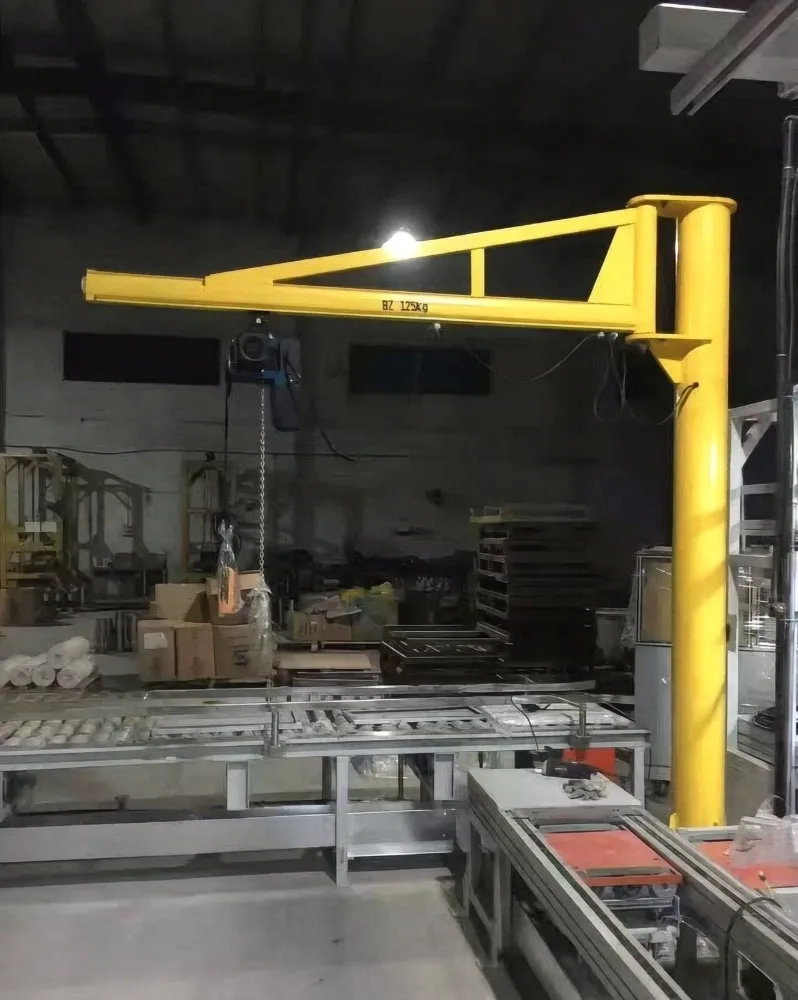
This is a common question when customers are comparing different jib crane suppliers.
But there is no single number that applies to every jib crane.
A jib crane used occasionally in a clean indoor workshop can have a very different service life from a crane working every day in a dusty, humid or corrosive environment.
The actual service life depends on several factors, including:
- Crane material and manufacturing quality
- Working environment
- Maintenance
- Operating frequency
- Load conditions
- Installation quality
In simple terms:
A jib crane lasts longer when it is properly designed, correctly installed, operated within its rated capacity and regularly maintained.
Here are the five factors you should pay attention to.
1. Crane Material and Manufacturing Quality
The first factor is the crane itself.
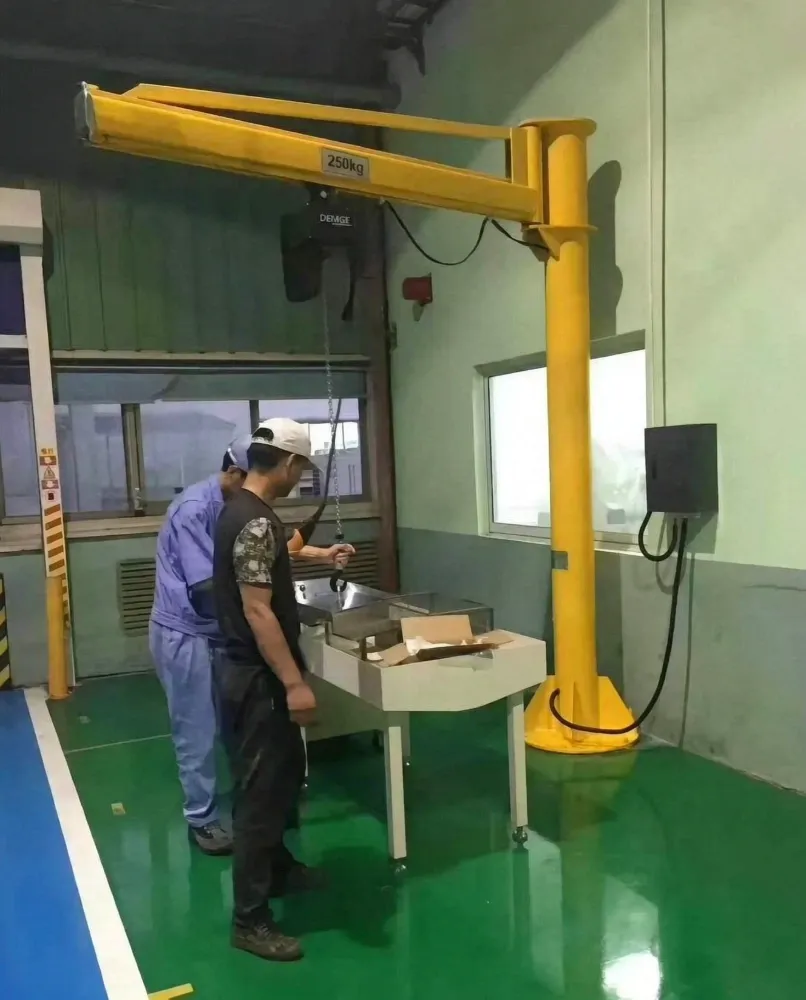
A jib crane is not just a steel column and a hoist.
Its service life depends on the quality and design of many components, including:
- Steel structure
- Jib boom
- Column
- Base plate
- Welded joints
- Slewing mechanism
- Bearings
- Trolley
- Hoist
- Bolted connections
- Electrical components
- Surface protection
Steel Structure
The column and boom need to be designed according to the required:
- Lifting capacity
- Working radius
- Span
- Duty cycle
- Load spectrum
Simply using thicker steel does not automatically make a better crane.
The complete structure needs to be properly engineered.
Welding Quality
Poor welding can create structural problems over time.
During inspection, look for:
- Visible cracks
- Undercut
- Poor weld formation
- Incomplete welds
- Excessive deformation
Critical welded areas should be inspected according to the applicable quality and inspection requirements.
Bearings and Slewing Components
For a jib crane, the slewing system is especially important.
If the crane rotates frequently, bearings and other moving components experience repeated loads.
Appropriate components, correct installation and proper lubrication can help reduce unnecessary wear.
2. The Working Environment Can Change Crane Life
The same jib crane can have very different maintenance requirements in different environments.
A clean indoor workshop is generally less demanding than a coastal warehouse or chemical processing area.
Important environmental factors include:
- Humidity
- Dust
- Salt spray
- Corrosive gases
- High temperature
- Rain
- Outdoor exposure
Coastal and Marine Environments
If a jib crane is installed near the coast, salt and moisture can accelerate corrosion.
In these conditions, consider appropriate:
- Surface preparation
- Anti-corrosion coating
- Protective paint system
- Stainless or corrosion-resistant components where required
- Electrical enclosure protection
- Regular cleaning and inspection
However, stainless steel is not automatically required for the entire crane.
The correct corrosion protection depends on the specific environment and component.
A coastal warehouse and a directly exposed marine environment may require different protection systems.
Chemical and Corrosive Environments
Chemical plants may expose cranes to corrosive substances.
In these applications, the supplier should know:
- Which chemicals are present
- Their concentration
- Temperature
- Exposure frequency
- Indoor or outdoor conditions
The crane can then be specified with an appropriate corrosion protection system.
Don't simply tell the supplier:
"The environment is corrosive."
Provide as much information as possible.
Dusty Workshops
Dust can affect:
- Bearings
- Electrical components
- Motors
- Brakes
- Limit switches
- Moving mechanisms
If the crane works in a dusty environment, regular cleaning and inspection become more important.
The electrical protection level should also be appropriate for the working environment.
3. Maintenance Has a Major Impact on Service Life
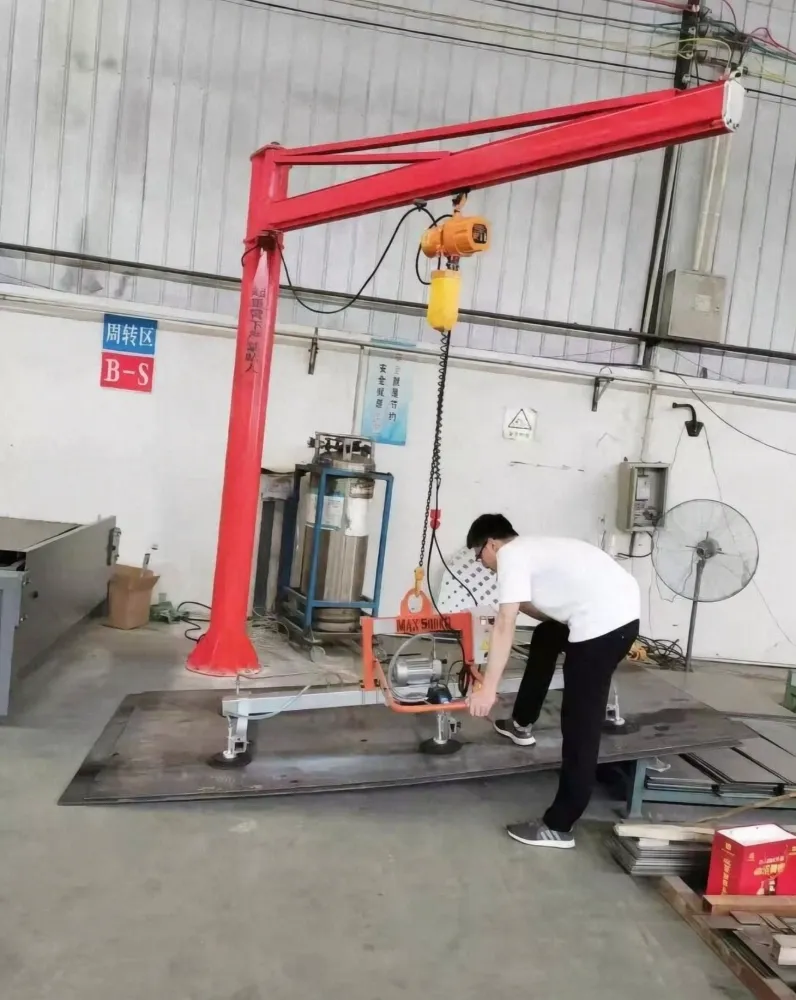
Even a well-designed jib crane needs maintenance.
Think of crane maintenance like servicing a vehicle.
You don't wait for the engine to fail before changing the oil.
The same principle applies to lifting equipment.
Regular inspections can help identify problems before they become major failures.
What Should Be Checked Regularly?
Depending on the crane design and applicable maintenance requirements, inspections may include:
Bolted Connections
Check for:
- Loose bolts
- Damaged threads
- Missing components
- Abnormal movement
Pay particular attention to structural and slewing connections.
Bearings and Moving Parts
Check for:
- Abnormal noise
- Excessive play
- Difficult rotation
- Insufficient lubrication
- Visible damage
Hoist and Wire Rope
For wire-rope hoists, inspect the rope for:
- Broken wires
- Corrosion
- Kinks
- Crushing
- Excessive wear
- Abnormal deformation
The wire rope should be replaced according to the applicable inspection criteria, not simply because it has reached a certain age.
Hooks
Inspect the hook for:
- Cracks
- Deformation
- Excessive wear
- Damage to the safety latch
Boom and Column
Check for:
- Cracks
- Permanent deformation
- Corrosion
- Abnormal movement
- Damaged welds
If a structural component shows significant deformation or cracking, stop using the crane and arrange a professional inspection.
4. Working Frequency Affects Service Life
Not every jib crane works at the same intensity.
Consider two cranes.
Crane A
- Used 1 hour per day
- Light loads
- Occasional lifting
- Clean indoor environment
Crane B
- Used 8 hours per day
- Frequent lifting
- Heavy loads
- Hundreds of operating cycles
- Dusty environment
Even if both cranes have the same rated capacity, their operating conditions are very different.
The second crane will generally place greater demands on:
- Bearings
- Gears
- Wheels
- Brakes
- Hoist components
- Electrical components
- Structural connections
This is why duty cycle and load spectrum should be considered when selecting a jib crane.
5. Never Use a Jib Crane Above Its Rated Capacity
This is one of the most important rules.
Suppose a jib crane is rated for:
1 ton
That does not mean you can occasionally lift:
1.5 tons
and continue doing so safely.
Overloading can increase stress on:
- Boom
- Column
- Foundation
- Slewing mechanism
- Bearings
- Hoist
- Wire rope
- Hook
- Structural connections
Repeated overloading can accelerate fatigue and component wear.
In severe cases, it can result in structural damage or failure.
What About Occasional Overload?
Do not treat overload as a normal operating method.
If your actual production requirements have increased, the correct solution is to reassess the crane capacity and working conditions.
You may need:
- A higher-capacity hoist
- A stronger jib structure
- A different working radius
- A different duty class
- A new jib crane
The rated capacity should always match the actual application.
Does a Heavier Jib Crane Last Longer?
Not necessarily.
This is another common misunderstanding.
A heavier crane does not automatically have a longer service life.
Service life depends on the complete design and operating conditions.
For example:
A properly engineered lightweight jib crane may perform reliably for its intended application.
A poorly designed heavy crane may still experience problems.
The important factors include:
Structural design + component quality + installation + load + duty cycle + maintenance + environment
How Long Does a Jib Crane Usually Last?
There is no universal service-life number that applies to every jib crane.
A properly designed and maintained jib crane can potentially remain in service for many years, but its actual service life depends on the equipment's design life, duty cycle, environment, maintenance history and structural condition.
Instead of asking only:
"Can this crane last 10 years?"
ask:
- What is the design duty?
- What operating conditions was it designed for?
- How frequently will it operate?
- What loads will it handle?
- What maintenance is required?
- What inspections are required?
- Are spare parts available?
- Can the crane be inspected and refurbished when components wear?
This gives a much more useful picture of long-term value.
Can a Jib Crane Be Refurbished?
In some cases, yes.
A crane does not necessarily need to be completely replaced simply because some components are worn.
Depending on its condition, refurbishment may involve:
- Bearing replacement
- Hoist replacement
- Wire rope replacement
- Brake maintenance
- Electrical component replacement
- Surface repainting
- Bolt replacement
- Trolley maintenance
- Slewing mechanism repair
However, structural damage is a different matter.
If the column or boom has serious cracking, deformation or fatigue damage, it should be professionally assessed before any repair decision is made.
Do not simply repair a damaged structural member and return the crane to service without an appropriate engineering assessment.
7 Maintenance Habits That Can Extend Jib Crane Service Life
A simple maintenance routine can prevent many avoidable problems.
Before Operation
Check for:
- Visible damage
- Abnormal deformation
- Hook condition
- Wire rope condition
- Unusual noise
- Obstructions in the working area
During Operation
Pay attention to:
- Abnormal vibration
- Difficult rotation
- Unusual noise
- Brake problems
- Load swinging
- Unexpected movement
Regular Maintenance
Depending on the crane and manufacturer's instructions:
- Lubricate appropriate moving components
- Inspect structural connections
- Inspect bearings
- Check wire rope
- Check hook and safety latch
- Inspect electrical components
- Check brakes and limit devices
- Inspect corrosion
The exact inspection frequency should follow the manufacturer's maintenance manual and applicable local requirements.
8 Signs That a Jib Crane Needs Inspection
Don't wait for a major failure.
Arrange an inspection if you notice:
1. The boom has visible deformation
The jib arm no longer appears to have its normal geometry.
2. Rotation becomes difficult
The operator needs significantly more force to rotate the boom.
3. Abnormal noise appears
Grinding, clicking or unusual bearing noise may indicate a problem.
4. The crane shakes excessively
Unusual movement can indicate mechanical, structural or foundation problems.
5. Bolts repeatedly become loose
This may indicate vibration, connection problems or installation issues.
6. Wire rope shows abnormal wear
Broken wires, corrosion, kinks or deformation require attention.
7. Cracks appear
Cracks in structural welds or components should never be ignored.
If a potentially serious defect is found, the crane should be taken out of service until it has been properly assessed.
Jib Crane Service Life Checklist
Before buying a jib crane, ask the supplier these questions:
Item | What to Ask |
|---|---|
Structural design | What capacity and radius is the crane designed for? |
Duty cycle | What working class is specified? |
Steel structure | What material and structural design are used? |
Welding | What quality and inspection procedures are applied? |
Bearings | What type of bearings are used? |
Hoist | What hoist configuration is supplied? |
Environment | Is the crane suitable for dust, humidity or corrosion? |
Coating | What corrosion protection system is used? |
Foundation | What are the foundation requirements? |
Maintenance | What maintenance schedule is recommended? |
Spare parts | Are replacement parts available? |
Inspection | What components require regular inspection? |
This information is much more useful than simply asking:
"How many years can it last?"
Jib Crane Service Life in Different Environments
Environment | Main Risk | Key Consideration |
|---|---|---|
Clean indoor workshop | Normal mechanical wear | Regular inspection |
Dusty factory | Dust accumulation | Cleaning and component protection |
Humid workshop | Corrosion | Coating and corrosion inspection |
Coastal area | Salt corrosion | Appropriate anti-corrosion protection |
Chemical plant | Chemical corrosion | Specialized material/coating selection |
Outdoor yard | Weather + wind | Structural and wind-load considerations |
Heavy-duty factory | Fatigue and wear | Correct duty class and maintenance |
This is particularly important for crane buyers in Southeast Asia and Africa, where coastal humidity, heavy rainfall, dust and high temperatures can vary significantly between locations.
FAQ About Jib Crane Service Life
How long does a jib crane last?
There is no fixed service life for every jib crane.
The actual lifespan depends on design, materials, duty cycle, environment, installation, maintenance and loading conditions.
What is the biggest factor affecting jib crane life?
There is no single factor.
However, operating the crane within its rated capacity, selecting the correct duty class and maintaining it properly are critical for long-term reliability.
Does overloading shorten jib crane life?
Yes.
Repeated operation above the rated capacity can increase structural and mechanical stress and accelerate wear or fatigue.
Does the environment affect jib crane service life?
Yes.
Humidity, salt spray, dust, corrosive chemicals and outdoor exposure can accelerate corrosion and component deterioration.
Can a jib crane be used near the sea?
Yes, but the crane should be specified for the environment.
Appropriate corrosion protection, electrical protection, inspection and maintenance should be considered.
How often should a jib crane be inspected?
Inspection frequency depends on the crane design, duty cycle, operating environment, manufacturer's instructions and applicable local regulations.
Daily/pre-use checks and periodic formal inspections may both be required.
What should I check during jib crane maintenance?
Common inspection areas include the boom, column, welds, bolts, bearings, slewing mechanism, hook, wire rope, hoist, brakes, electrical components and corrosion protection.
Can a damaged jib crane be repaired?
Some components can be repaired or replaced.
However, structural cracks, major deformation or suspected fatigue damage should be professionally assessed before the crane is returned to service.
Is a more expensive jib crane always longer-lasting?
Not necessarily.
Price is only one factor.
The better approach is to compare structural design, components, duty class, environmental suitability, maintenance requirements and expected service life.
Final: Jib Crane Life Depends on How You Use It
A jib crane does not have a simple expiration date.
Its service life is influenced by five major factors:
1. Equipment quality
Good engineering, appropriate materials and proper manufacturing provide the foundation.
2. Working environment
Humidity, dust, salt spray and chemicals can accelerate deterioration.
3. Maintenance
Regular inspection and lubrication can help identify problems before they become serious.
4. Working frequency
A crane operating continuously has very different requirements from one used occasionally.
5. Load conditions
Operating within the rated capacity is essential for safe and reliable service.
So when buying a jib crane, don't only ask:
"How many years will it last?"
Ask a better question:
"Is this crane properly designed for my load, duty cycle and working environment?"
A correctly selected, installed and maintained jib crane can provide reliable service for many years.
The goal is not simply to buy a crane that lasts a long time.
The goal is to buy a crane designed for the work you actually need it to do.