Aug 1, 2026Industry Solutions
Jib Crane for Mold Handling
Looking for efficient mold handling equipment? A workstation jib crane provides flexible 360° lifting, lower installation costs, and easy operation for factories and machine shops.
Why Choose a Jib Crane for Daily Mold Handling Instead of an Overhead Crane?
Introduction
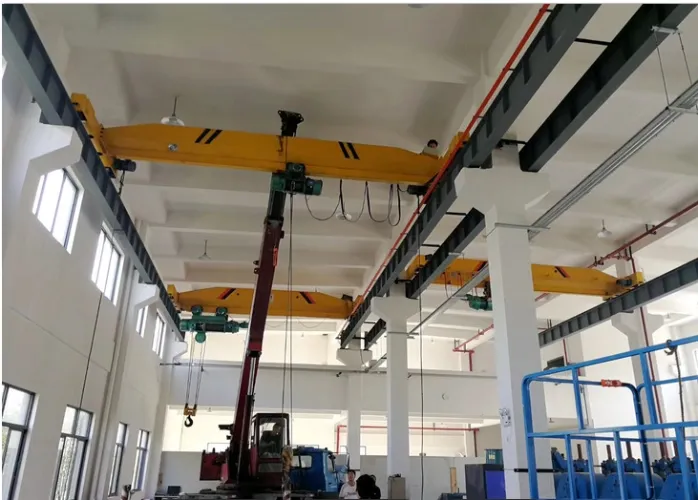
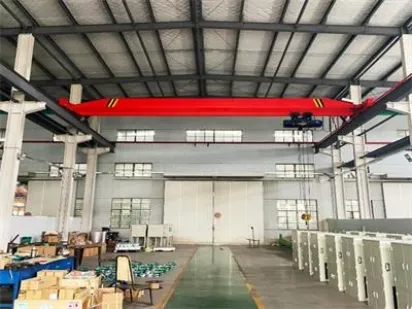
In mold manufacturing, injection molding, machining, and assembly workshops, operators often need to move molds frequently during daily production. Many factories consider installing an overhead crane for mold handling. However, for small and medium-sized lifting tasks at fixed workstations, a full overhead crane system may not always be the most economical solution.
A workstation jib crane provides a more flexible and cost-effective alternative. With a compact structure, easy installation, and high operating efficiency, jib cranes are widely used for mold lifting, machine loading, maintenance operations, and small component handling.
1. Lower Investment Cost Compared with Overhead Cranes
Installing an overhead crane usually requires additional infrastructure, including:
- Steel runway beams
- Supporting structures
- Factory building reinforcement
- Electrical installation
- Professional installation work
For workshops that only need to lift molds or small loads at specific positions, these additional investments can significantly increase project costs.
A small jib crane requires much less supporting infrastructure. Most models can be installed directly on:
- Concrete floors
- Existing foundations
- Machine bases
- Workstation areas
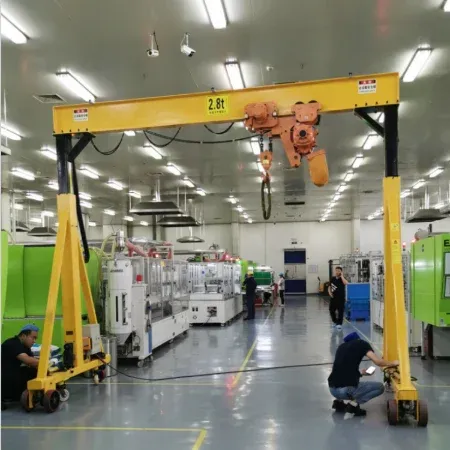
Compared with overhead cranes and small gantry cranes, jib cranes usually have a lower initial investment, making them an ideal lifting solution for factories that need localized material handling.
2. Lower Maintenance and Energy Costs
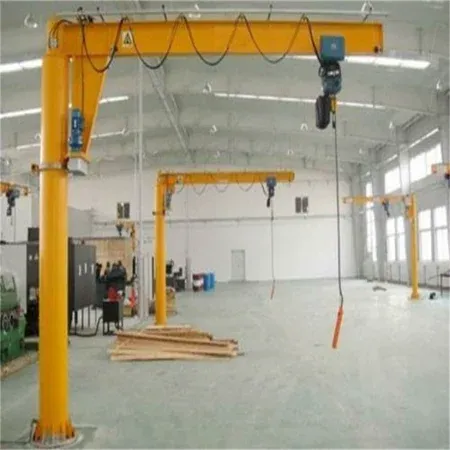
A jib crane has a simple mechanical structure consisting mainly of:
- Slewing mechanism
- Hoisting mechanism
- Jib arm
- Support column
Because of fewer mechanical components, maintenance requirements are lower compared with larger crane systems.
Advantages include:
- Fewer wearing parts
- Lower power consumption
- Easier troubleshooting
- Reduced downtime
For factories requiring frequent daily mold movement, a workstation jib crane can help reduce long-term operating costs.
3. Better Space Utilization for Limited Workshop Areas
Many factories face space limitations, especially:
- Injection molding workshops
- Machine shops
- Assembly lines
- Maintenance areas
- Tool rooms
Unlike overhead cranes, jib cranes do not require a complete runway system across the workshop.
A compact jib crane can be installed near the working position and provides direct lifting service where it is needed.
Typical applications include:
- Mold replacement on injection molding machines
- Machine tool loading and unloading
- Equipment maintenance
- Parts assembly operations
This makes jib cranes especially suitable for factories where overhead space is limited.
4. 360° Rotation for Flexible Material Handling
One of the biggest advantages of a jib crane is its flexible working range.
Depending on the design, jib cranes can provide:
- 180° rotation
- 270° rotation
- 360° rotation
The operator can easily move loads between different working positions.
Combined with:
- Electric chain hoist
- Wire rope hoist
- Wireless remote control
a jib crane allows precise positioning of molds and components, improving workplace efficiency and safety.
5. Easy Operation and Quick Installation
Compared with complex crane systems, jib cranes are simple to operate.
Operators only need basic training to control:
- Lifting and lowering
- Slewing movement
- Load positioning
Installation is also faster because jib cranes do not require long runway structures.
This makes them suitable for:
- New factories
- Workshop upgrades
- Production line improvements
- Temporary lifting stations
6. Customizable Design for Different Mold Handling Requirements
Different factories have different lifting requirements. A jib crane can be customized according to:
- Lifting capacity
- Working radius
- Lifting height
- Installation method
- Hoist type
- Control method
Common specifications include:
- Capacity: 125kg–5 tons
- Arm length: 2–8 meters
- Rotation angle: 180°–360°
- Electric or manual rotation options
Various lifting attachments can also be added according to application requirements.
Jib Crane vs Overhead Crane: Which One Is Better for Mold Handling?
Item | Jib Crane | Overhead Crane |
|---|---|---|
Installation cost | Lower | Higher |
Required space | Small | Large |
Installation time | Short | Longer |
Coverage area | Local workstation | Entire workshop |
Maintenance | Easier | More complex |
Best application | Small and frequent lifting | Heavy and large-scale handling |
For factories that need to move heavy molds across the entire workshop, an overhead crane may be the better choice. However, for fixed workstations and frequent small-load handling, a jib crane is usually more practical.
Applications of Jib Cranes in Mold and Manufacturing Industries
Jib cranes are widely used in:
Injection Molding Factories
- Mold installation
- Mold replacement
- Machine maintenance
Metal Processing Workshops
- Component lifting
- Workpiece positioning
- Assembly operations
Automotive Manufacturing
- Parts handling
- Tool movement
- Maintenance work
Equipment Manufacturing
- Assembly stations
- Testing areas
- Repair workshops
Conclusion: Is a Jib Crane the Right Choice for Your Workshop?
If your factory mainly handles molds, tools, and small components at fixed workstations, installing a complete overhead crane system may not be the most economical option.
A workstation jib crane provides:
✔ Lower investment cost
✔ Simple installation
✔ Low maintenance requirements
✔ Flexible 360° operation
✔ Better space utilization
✔ Efficient daily lifting performance
For mold handling applications, a jib crane is a practical and cost-effective lifting solution for improving workshop productivity.