Jul 30, 2026Industry Solutions
Should You Choose a 5 Ton or 10 Ton Overhead Crane If Your Load Is Around 4 Tons?
Learn how lifting frequency, duty cycle, starting impact, and working conditions affect crane selection for safety, durability, and long-term operating costs.
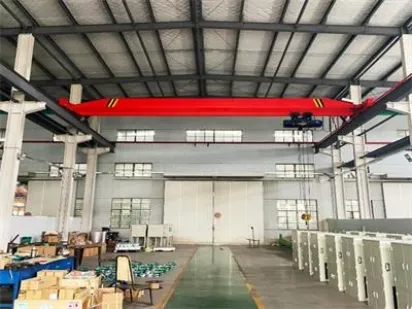
Should You Choose a 5 Ton or 10 Ton Overhead Crane If Your Load Is Around 4 Tons?
Many buyers assume that if their heaviest load is around 4 tons, a 5 ton overhead crane is always the right choice.
However, maximum lifting weight is only one factor. The real decision depends on how often the crane operates, how it starts and stops, and the overall working conditions.
Choosing the wrong capacity can shorten the crane's service life, increase maintenance costs, and reduce safety.
This guide explains when a 5 ton crane is sufficient and when upgrading to a 10 ton crane is the smarter investment.
The First Question to Ask Yourself
Before selecting an overhead crane, ask yourself these questions:
- What products are you lifting?
- Which industry are you in?
- What is the maximum lifting weight?
- How many lifting cycles does the crane perform each day?
- Does the crane frequently start and stop under load?
These questions are often more important than the lifting capacity itself.
Scenario 1: A 5 Ton Overhead Crane Is Usually Enough
A 5 ton overhead crane is generally suitable if:
- Your maximum load is around 4 tons.
- Lifting operations are occasional.
- Loads are lifted smoothly.
- There are few emergency starts or sudden stops.
- Daily operating hours are relatively short.
Examples include:
- Equipment maintenance
- Small workshops
- Warehouse material handling
- Fabrication shops with light-duty lifting
Under these conditions, a properly designed 5 ton crane provides adequate safety margin while reducing equipment investment.
Advantages
- Lower purchase cost
- Lower energy consumption
- Reduced structural load on the building
- Easier installation and maintenance
Scenario 2: Why a 10 Ton Crane May Be the Better Choice
Many factories lift only 4 tons, yet still choose a 10 ton overhead crane.
Why?
Because the crane works under heavy-duty operating conditions, including:
- Hundreds of lifting cycles every day
- Frequent starting and stopping
- Continuous traveling
- Repeated acceleration and braking
- Impact loads caused by swinging materials
- Multiple shifts
Although the load remains 4 tons, these conditions place much greater stress on the motor, gearbox, brakes, wire rope, wheels, bearings, and electrical components.
A larger-capacity crane generally has:
- Stronger mechanical components
- Higher-duty motors
- More durable transmission systems
- Better resistance to fatigue
- Longer service life under intensive operation
For high-frequency production lines, choosing a 10 ton crane can significantly reduce maintenance and downtime.
Why Working Conditions Matter More Than Maximum Load
Two factories may both lift 4 tons, but their crane requirements can be completely different.
Working Condition | Recommended Capacity |
|---|---|
Occasional lifting, smooth operation | 5 Ton |
High-frequency lifting (100+ cycles/day) | 10 Ton |
Continuous production | 10 Ton |
Heavy impact loading | 10 Ton |
Maintenance workshop | 5 Ton |
This is why experienced crane engineers evaluate duty cycle, not just lifting weight.
Don't Ignore Crane Duty Classification
Professional crane selection is based on working duty, not only rated capacity.
Engineers normally consider:
- Daily operating hours
- Number of lifting cycles
- Load spectrum
- Traveling frequency
- Starting and braking impact
- Production schedule
A crane operating continuously in a manufacturing plant experiences much greater wear than one used occasionally in a maintenance workshop.
Long-Term Cost Is More Important Than Purchase Price
Some buyers choose a smaller crane to save on initial investment.
However, if the crane is used intensively, this often leads to:
- Faster component wear
- More frequent repairs
- Production interruptions
- Higher maintenance costs
- Shorter equipment lifespan
In many cases, investing in a higher-capacity crane results in lower total ownership cost over the equipment's lifetime.
Frequently Asked Questions (FAQ)
Is a 5 ton crane safe for lifting 4 tons?
Yes, provided the crane operates under normal working conditions, lifting is relatively infrequent, and all safety regulations are followed.
Why do some factories choose a 10 ton crane even though they only lift 4 tons?
Because they perform frequent lifting, continuous operation, or experience impact loading. A larger-capacity crane offers better durability and longer service life under demanding conditions.
Does a bigger crane always mean better?
No.
Oversizing unnecessarily increases equipment cost, building requirements, and energy consumption. The correct choice depends on both load weight and working conditions.
What information should I provide before selecting an overhead crane?
To recommend the right crane, suppliers usually need:
- Maximum lifting capacity
- Span
- Lifting height
- Daily operating hours
- Number of lifting cycles
- Type of materials being handled
- Indoor or outdoor installation
- Power supply
- Working environment
Final Recommendation
If your maximum lifting weight is around 4 tons, the decision should not be based solely on load capacity.
- Choose a 5 ton overhead crane for light-duty, occasional lifting with smooth operation.
- Choose a 10 ton overhead crane if your workshop performs frequent lifting, continuous operation, or experiences repeated starting, stopping, and impact loads.
The right crane is not simply the one with the highest capacity—it is the one that best matches your actual working conditions, ensuring safety, reliability, and long-term value.