Jul 30, 2026Buying Guide
What is a Single Girder Overhead Crane?
This is a complete guide for factory owner to choose single girder overhead crane
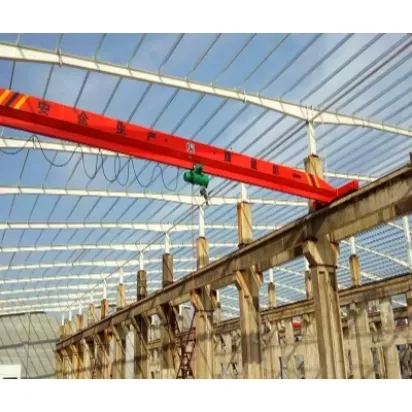
What is a Single Girder Overhead Crane?
A single girder overhead crane (also known as a single girder bridge crane) is an essential material handling system consisting of a single bridge girder supported by two end trucks. Unlike double girder systems, the hoist and trolley run along the bottom flange of the main bridge beam.
Due to its lightweight structure, cost-effectiveness, and easy installation, it is one of the most widely used lifting solutions in modern manufacturing, logistics, and warehousing.
1. How Many Tonnes Can a Single Girder Overhead Crane Lift?
Typically, single girder overhead cranes are designed to handle loads ranging from 1 to 20 tonnes:
- 5 to 10 Tonnes: The sweet spot for small-to-medium-sized workshops, maintenance bays, and assembly lines.
- 15 to 20 Tonnes: Suitable for heavy-duty lifting scenarios within single girder design limitations.
Important Note: While 20 tonnes is generally the practical maximum capacity for a standard single girder setup, applications exceeding 20 tonnes usually require a double girder overhead crane for better structural stability and hook height.
2. What is the Maximum Span of a Single Girder Overhead Crane?
The span is customized based on your facility's width. According to standard manufacturing norms (such as standard GB/T 14405-2011 for LD-type electric single girder cranes), spans can technically range from 7.5 meters up to 31.5 meters.
- Standard / Most Common Span: 10 to 20 meters.
- Structural Limitation: As the span exceeds 20 meters, the stiffness of a single beam decreases. To maintain structural stability and safety, reinforced beam designs are required, or the lifting capacity must be reduced (for example, a 20-meter span single girder crane typically caps its capacity at 10 tonnes).
3. What are the Applications of Single Girder Overhead Cranes?
Single girder bridge cranes are extremely versatile. They are widely used across workshops, warehouses, assembly plants, and material storage yards in various industries, including:
- Manufacturing & Machining (Equipment assembly, heavy parts moving)
- Warehousing & Logistics (Pallet and cargo loading/unloading)
- Paper, Construction Materials & Electronics
- Energy, Power Stations & Petrochemicals
- Transport Infrastructure (Ports, railways, and civil aviation maintenance)
4. Why is a Single Girder Crane Cheaper Than a Double Girder Crane?
The significant cost difference between single girder and double girder cranes comes down to structural design, material usage, and total lifecycle costs.
A. Material & Structural Costs
A single girder crane uses only one main beam, making the entire structure lightweight and less steel-intensive. In contrast, double girder cranes require two parallel main beams and a heavier frame, consuming significantly more raw steel and incurring higher manufacturing complexity.
B. Hoisting Mechanism
Single girder cranes utilize lower-cost electric wire rope hoists or chain hoists suspended directly beneath the main girder. Double girder cranes rely on top-running winch trolleys or complex hoist units riding on top of two beams, which increases overall mechanical complexity and production costs.
C. Installation & Maintenance Expenses
- Installation: Single girder cranes have a smaller footprint and lighter weight, leading to shorter installation times and lower labor costs.
- Maintenance: With fewer moving mechanical components, single girder systems experience lower failure rates. Daily maintenance is faster and far less expensive than maintaining complex double-girder drive and braking systems.
Single Girder vs. Double Girder: Which Should You Choose?
Feature | Single Girder Overhead Crane | Double Girder Overhead Crane |
Lifting Capacity | Small to Medium (≤20 Tonnes) | Heavy Duty (Up to hundreds of tonnes) |
Span Length | Short to Medium (≤ 20–30 meters) | Long Spans (>30 meters) |
Duty Class | Light to Moderate (A3–A5) | Heavy to Severe (A5–A8) |
Initial Cost | Economical / Budget-friendly | High Capital Investment |
Best For | Standard warehouses & light manufacturing | Steel mills, foundries, & heavy yards |
- Choose Single Girder if: You need an economical solution for light-to-medium loads (≤20 tonnes), moderate spans, standard work frequency, and have limited ceiling clearance or budget constraints.
- Choose Double Girder if: You handle heavy loads (> 20 tonnes), require long spans, operate in high-duty cycle environments, or need maximum hook height.