Aug 11, 2026Buying Guide
Which Factories Are European Overhead Cranes Suitable For?
Discover which factories can benefit from European overhead cranes, including machinery plants, steel workshops, precision manufacturing and old factory buildings.
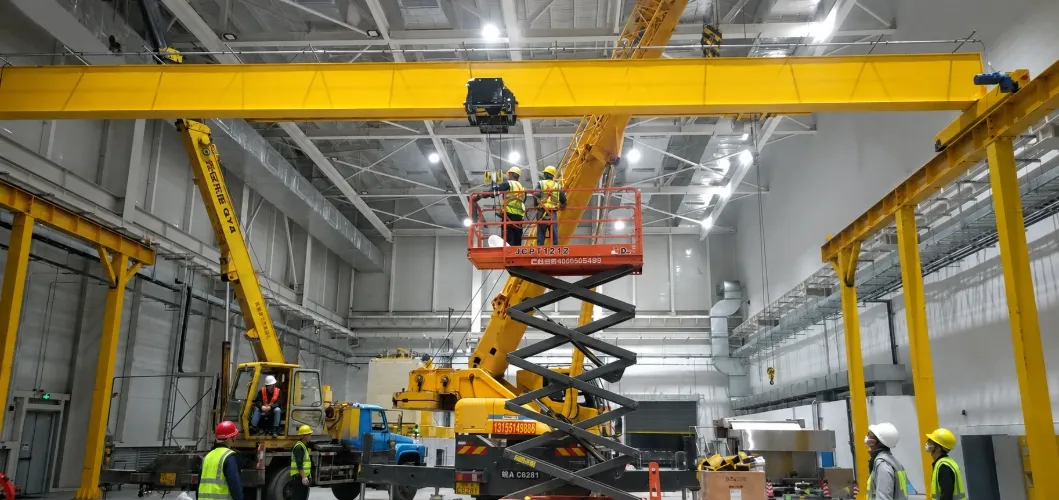
Which Factories Are European Overhead Cranes Suitable For?
Not every factory needs a European overhead crane.
But for some workshops, choosing a European-type crane can provide important advantages in lifting height, workshop space utilization, operating efficiency and crane weight.
So, which factories are European overhead cranes suitable for?
Here are 4 common applications where they are worth considering.
What Is a European Overhead Crane?
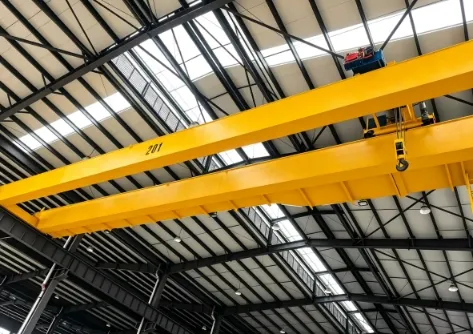
A European overhead crane is a modern crane design that focuses on compact structure, efficient use of space and optimized mechanical components.
Depending on the specific design, European-type cranes may use:
- Compact hoists
- Low headroom lifting arrangements
- Optimized girder structures
- Lightweight crane components
- Variable frequency drives
- Modern control systems
The exact configuration depends on the lifting capacity, span, lifting height, working class and building structure.
The goal is not simply to make the crane "more advanced."
The goal is to make better use of the available workshop space and operating conditions.
1. Machinery and Mold Factories: When Lifting Height Matters
Mold factories and machinery workshops often have an important requirement:
Make full use of the available building height.
In a conventional crane arrangement, the hoist and crane structure may take up a significant amount of vertical space.
This can reduce the available hook lifting height.
A European overhead crane can use a more compact lifting arrangement.
Depending on the crane design, this can provide a lower overall headroom requirement and better hook height utilization.
This can be useful when:
- The factory building is not very high
- Large molds need to be lifted
- Machinery needs to be installed or removed
- The available hook height is limited
- Floor space is valuable
For example, a mold workshop may need to lift a mold from the floor and position it accurately on a machine.
Every extra meter of usable lifting height can make the operation easier.
Best fit
Mold manufacturing + machinery manufacturing + equipment maintenance
If your workshop has limited vertical space, European-type crane design is worth comparing with a conventional overhead crane.
2. Steel Structure and Hardware Factories: Frequent Material Handling
Steel structure workshops and hardware processing factories often have a different problem.
The crane may operate frequently throughout the working day.
Typical operations include:
- Loading steel components
- Moving steel plates
- Handling fabricated structures
- Feeding production equipment
- Moving finished products
- Loading and unloading materials
In these conditions, crane operating efficiency and reliability become important.
A properly designed European overhead crane can use optimized components and modern control systems to support frequent material handling.
For example, variable frequency control can provide smoother:
- Starting
- Stopping
- Lifting
- Lowering
- Crane travel
- Trolley travel
This can reduce unnecessary load swinging and improve operator control.
However, working class must still match the actual duty cycle.
A European design does not automatically mean the crane is suitable for heavy-duty operation.
The crane should be selected according to:
- Working hours
- Lifting cycles
- Average load
- Maximum load
- Working environment
- Required duty class
3. Precision Manufacturing and Electronic Assembly
Some factories are more concerned about smooth movement than maximum lifting capacity.
Examples include:
- Precision machining
- Electronics assembly
- Medical equipment manufacturing
- Equipment assembly
- Automated production lines
In these environments, uncontrolled load movement can make material positioning more difficult.
A crane equipped with appropriate control technology, such as variable frequency drives, can provide smoother acceleration and deceleration.
This can help reduce sudden movement and load swinging.
For example, when moving a precision component from one workstation to another, smoother crane movement can make positioning easier for the operator.
But it is important to understand:
A crane cannot guarantee product precision by itself.
The actual result depends on the complete crane configuration, control system, load characteristics, operator experience and production process.
4. Old Factory Buildings and Lightweight Structures
This is another situation where European-type cranes can be worth considering.
Many factories in Southeast Asia and Africa operate in:
- Older industrial buildings
- Existing workshops
- Lightweight steel buildings
- Renovated factories
- Buildings with limited structural capacity
In these situations, adding a new crane is not simply a matter of selecting lifting capacity.
The building structure also needs to be considered.
A modern European crane design may achieve a relatively low crane self-weight through structural optimization.
This can potentially reduce the additional load imposed on the existing building structure.
However:
A lighter crane does not mean that an existing building can automatically support it.
Before installation, the supporting structure should be checked by a qualified engineer.
Important factors include:
- Runway beam capacity
- Building columns
- Roof structure
- Crane wheel loads
- Dynamic loads
- Existing structural condition
For old factory renovation projects, structural assessment should be completed before ordering the crane.
European Overhead Crane vs. Conventional Crane
So, what are the main differences?
Factor | European Overhead Crane | Conventional Overhead Crane |
|---|---|---|
Structure | Compact and optimized | Conventional structure |
Headroom | Often optimized | Depends on configuration |
Hook height | Can be improved with low-headroom design | Depends on hoist and building |
Self-weight | Can be optimized | Depends on design |
Controls | Often uses modern control systems | Basic or advanced options available |
Space utilization | Generally a strong advantage | Depends on design |
Initial cost | Often higher | Can be more economical |
Application | Modern factories and space-limited workshops | Wide range of applications |
This table should not be interpreted as saying that European cranes are always better.
For a simple workshop with low utilization, a conventional crane may provide a better cost-performance ratio.
When Should You Consider a European Overhead Crane?
A European-type crane may be worth considering if your factory has one or more of these conditions:
Limited Building Height
You want to maximize usable hook height.
Limited Floor or Building Space
You want a compact crane arrangement.
Frequent Crane Operation
The crane operates regularly throughout the working day.
Smooth Material Handling
Your application benefits from controlled acceleration and deceleration.
Factory Renovation
You are installing a crane into an existing building and need to consider structural loads.
Modern Production Line
The crane needs to integrate with an efficient material handling process.
If several of these conditions apply, compare a European-type crane with a conventional overhead crane before making a decision.
Is a European Overhead Crane More Expensive?
Usually, the initial purchase price can be higher than a basic conventional crane.
This is because the system may use:
- Compact hoists
- Optimized steel structures
- Modern motors
- Variable frequency drives
- More advanced electrical systems
- Higher-performance components
But purchase price is only one part of the calculation.
You should also consider:
- Available lifting height
- Workshop space
- Operating efficiency
- Maintenance requirements
- Energy consumption
- Expected service life
- Future production requirements
The cheapest crane is not always the cheapest solution over the entire service life.
How to Choose the Right European Overhead Crane?
Before asking for a quotation, prepare the following information:
1. Lifting Capacity
For example:
5 tons, 10 tons, 20 tons or another required capacity.
2. Span
Measure the distance between the runway rails.
3. Lifting Height
Determine the required hook height.
4. Working Class
Consider working hours, lifting cycles and load spectrum.
5. Building Dimensions
Provide:
- Building width
- Building height
- Runway elevation
- Available headroom
6. Working Environment
Tell the supplier whether the crane will operate in:
- Machinery workshop
- Steel plant
- Warehouse
- Outdoor yard
- Dusty environment
- High-temperature environment
7. Power Supply
Provide the local electrical requirements.
For export projects, confirming the power supply early can avoid unnecessary electrical modifications later.
4 Questions to Ask Before Buying a European Crane
Before comparing quotations, ask the supplier:
Question 1: How much hook height can I achieve?
Question 2: What is the crane's working class?
Question 3: What are the crane wheel loads and building requirements?
Question 4: What maintenance and spare parts are required?
These questions are often more useful than simply asking:
"How much is the crane?"
FAQ About European Overhead Cranes
What is a European overhead crane?
A European overhead crane is a modern crane design focused on compact structure, efficient space utilization and optimized components.
What factories are suitable for European overhead cranes?
They can be suitable for machinery factories, mold workshops, steel structure plants, hardware factories, precision manufacturing facilities, assembly workshops and factory renovation projects.
The final choice depends on the actual working conditions.
Is a European overhead crane better than a conventional crane?
Not always.
A European crane may offer advantages in compact design, headroom and control technology, but a conventional crane can be more economical for simpler applications.
The right choice depends on the project.
Does a European crane provide more lifting height?
It can.
A compact hoist and optimized crane structure can reduce the space occupied above the hook.
However, the actual lifting height depends on the complete crane design and building dimensions.
Is a European overhead crane suitable for old factories?
It can be considered for factory renovation projects, especially when building space and structural loads are limited.
However, the existing building must be assessed before installation.
Are European overhead cranes suitable for Africa and Southeast Asia?
Yes, they can be suitable for many industrial applications in these regions.
However, the crane should be designed according to local power supply, building structure, climate, working environment and applicable safety requirements.
Is a European overhead crane more expensive?
The initial price may be higher than a basic conventional crane.
However, the total value should be evaluated based on lifting height, operating efficiency, maintenance, energy use and expected service life.
Can a European overhead crane handle heavy loads?
Yes, European-type designs can be engineered for different lifting capacities.
However, lifting capacity alone does not determine the correct crane.
Working class, span, lifting height, load spectrum and operating environment must also be considered.
Final: Who Should Consider a European Overhead Crane?
A European overhead crane is worth considering when your factory needs more than simply "a crane that can lift."
It may be a good option for:
1. Mold and machinery factories
When available lifting height and space utilization are important.
2. Steel structure and hardware factories
When the crane operates frequently and efficient material handling matters.
3. Precision manufacturing and assembly
When smoother crane movement and better control are valuable.
4. Old factory renovation projects
When building space and structural loads need careful consideration.
But remember:
European does not automatically mean better.
The best crane is the one that matches your actual capacity, span, lifting height, duty class, building structure and working conditions.
If you are planning a new factory or upgrading an existing workshop, provide these parameters to your crane supplier. A proper engineering comparison can help you decide whether a European overhead crane is actually worth the investment.