Aug 17, 2026Maintenance
Why Does an Overhead Crane Girder Bend? 4 Common Causes
Why does an overhead crane girder bend or permanently deform? Learn how overloading, impact loads, fatigue, improper crane selection and lifting operations can damage the main girder.
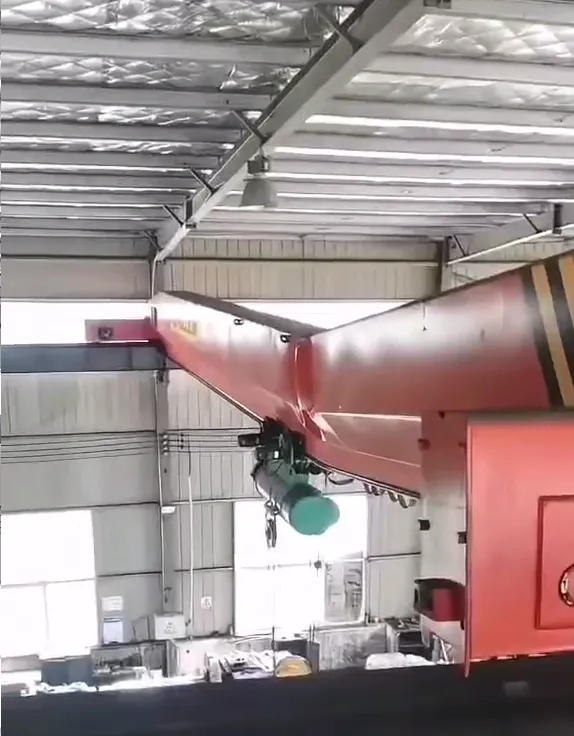
Why Does an Overhead Crane Girder Bend? Causes, Risks and Prevention
An overhead crane main girder is designed to carry heavy loads.
So why does a crane girder sometimes become permanently bent?
Many people immediately blame the steel.
But permanent girder deformation can have several possible causes, including:
- Inadequate structural design
- Repeated heavy-duty operation
- Overloading
- Impact or shock loading
- Improper lifting operations
- Structural damage
There is also an important distinction:
Normal elastic deflection is not the same as permanent girder bending.
A properly designed crane girder will deflect slightly when carrying a load. This is normal.
The problem begins when the girder does not return to its designed geometry after the load is removed, or when deformation exceeds the applicable limits.
Let's look at the most common causes.
1. Inadequate Girder Design or Structural Capacity
The first possible cause is that the main girder is not adequately designed for the actual working conditions.
A crane girder should not be selected only according to:
Lifting Capacity
The structural design also needs to consider:
- Crane span
- Girder section
- Steel material
- Plate thickness
- Stiffeners
- Trolley and hoist weight
- Load spectrum
- Working frequency
- Duty class
- Dynamic effects
For example, two cranes may both have a rated capacity of 5 tons.
But:
Crane A
5-ton capacity
10-meter span
Used occasionally
Crane B
5-ton capacity
25-meter span
Used continuously throughout the day
The structural requirements are obviously different.
This is why simply saying:
“It is a 5-ton crane.”
does not tell you enough about the main girder.
2. Repeated Heavy Loads and Fatigue
Another important factor is long-term repeated loading.
A crane girder experiences repeated stress cycles every time the crane lifts and lowers a load.
For a crane that operates occasionally, the number of cycles may be relatively low.
For a production crane operating continuously, the number of load cycles can become very high.
This is why crane duty class matters.
Repeated loading can contribute to fatigue damage in structural details over time, particularly if the crane is being operated outside the conditions for which it was designed.
The danger is that early fatigue damage may not always be obvious from the ground.
The crane may still:
- Lift normally
- Travel normally
- Look normal
until more noticeable damage develops.
This is one reason periodic inspection is important. OSHA guidance includes checking for deformed, cracked, corroded, worn or loose crane members and components during periodic inspection.
3. Overloading the Overhead Crane
This is one of the easiest problems to understand.
Suppose you have a:
5-ton overhead crane
but regularly use it to lift:
8 tons or 10 tons.
This is a serious overload.
The crane's rated capacity is the maximum load for which it was designed and built by the manufacturer and shown on its nameplate. OSHA states that overhead and gantry cranes should not be loaded beyond their rated load except for specified testing purposes.
Overloading does not only affect the main girder.
It can also overload:
- Electric hoist
- Wire rope
- Hook
- Brake
- Trolley
- End trucks
- Wheels
- Structural connections
- Runway system
The fact that a crane successfully lifted an overloaded object once does not mean the operation was safe.
What Happens to the Main Girder During an Overload?
When the trolley and load are positioned around the critical part of the span, the main girder experiences significant bending.
Under its designed load, the girder should remain within its structural design requirements.
But if the load significantly exceeds the rated capacity, stresses and deflection can increase beyond the intended operating condition.
This can potentially result in:
- Excessive deflection
- Permanent deformation
- Local buckling
- Weld damage
- Structural cracking
- Other component damage
In severe cases, structural failure is possible.
4. Shock Loading During Lifting Operations
This is the part many crane users overlook.
The object may weigh only 5 tons.
The crane may also be rated for 5 tons.
So the operator thinks:
“5 tons lifting 5 tons. No problem.”
But lifting operations are not always purely static.
A moving load creates dynamic effects.
For example:
- Sudden lifting
- Sudden stopping
- Load swinging
- Snatching a load
- Dropping and catching a load
- Collision
- Improper load turning
can introduce additional forces into the crane system.
OSHA's overhead-crane operating requirements specifically call for avoiding sudden acceleration or deceleration of a moving load.
Why Can Load Turning Be More Demanding?
Factories frequently need to turn large components.
Examples include:
- Steel structures
- Molds
- Machinery components
- Precast components
- Large fabricated parts
Turning a load requires careful planning.
The problem is not simply the weight printed on the drawing.
During an uncontrolled turning operation, the load may:
Rotate → Swing → Drop through a short distance → Suddenly tension the lifting system
This can introduce dynamic loading.
The actual forces depend on the lifting method, rigging arrangement, load geometry, center of gravity and movement of the load.
Therefore, you should not assume that a crane rated for 5 tons can safely perform every possible turning operation involving a 5-ton component.
The lifting method needs to be evaluated separately.
Static Load vs Dynamic Load
This distinction is important for crane buyers.
Static Situation
A load is suspended steadily below the crane.
The forces are relatively stable.
Dynamic Situation
The load is:
- Accelerating
- Decelerating
- Swinging
- Turning
- Impacting
- Being suddenly restrained
Additional dynamic effects can occur.
This is why smooth crane operation is not simply about operator comfort.
It also helps avoid unnecessary shock loading on the crane and suspended load.
Is Normal Girder Deflection Dangerous?
Not necessarily.
This is another common misunderstanding.
A steel girder naturally deflects when a load is applied.
A properly designed crane therefore does not need to remain perfectly straight under load.
The important question is:
Is the deflection within the crane's design requirements?
Industry specifications address allowable vertical girder deflection rather than requiring zero movement. For example, CMAA material discusses deflection limits for crane girders under specified loading conditions.
Therefore:
Temporary elastic deflection ≠ girder failure
But:
Unexpected permanent deformation = investigate immediately
How Do You Know If a Girder Has Permanent Deformation?
Suppose the crane is unloaded.
The trolley is moved to the required inspection position.
But the main girder still shows abnormal downward deformation.
That deserves attention.
Other warning signs can include:
- Visible sagging
- New cracks
- Weld damage
- Trolley running downhill toward the center
- Trolley struggling to move away from the center
- Abnormal wheel or rail wear
- Unusual vibration
- Increased trolley motor load
- Abnormal noise
None of these symptoms alone proves the cause.
A qualified crane professional should inspect the structure and determine what has happened.
What Should You Do If the Crane Girder Is Bent?
Do not continue normal lifting and simply “see what happens.”
A visibly deformed main girder can indicate a serious structural problem.
The appropriate response is to:
Stop → Isolate → Inspect → Determine the Cause → Engineer the Solution
Inspection may include:
- Girder geometry measurement
- Camber measurement
- Deflection measurement
- Weld inspection
- Structural connection inspection
- Trolley inspection
- Load history review
- Non-destructive testing where required
- Engineering analysis
OSHA requires unsafe conditions identified during crane inspection to be corrected before operation resumes.
Can You Straighten a Bent Crane Girder and Continue Using It?
Do not assume that simply straightening the steel solves the problem.
You first need to determine:
Why did it bend?
If the cause was overload, the crane may have experienced damage beyond the visible deformation.
Potential concerns include:
- Plastic deformation
- Weld damage
- Local buckling
- Connection damage
- Fatigue cracking
- Hoist or trolley damage
Repair or modification should therefore be based on proper engineering assessment.
If a crane is modified and rerated, OSHA requires the crane and supporting structure to be thoroughly checked for the new rated load by a qualified engineer or the equipment manufacturer.
How to Prevent Crane Girder Bending
Prevention starts before the crane is purchased.
1. Know Your Maximum Load
Do not estimate.
Determine the actual maximum weight of:
Load + Lifting Attachments
This may include:
- Spreader beams
- Magnets
- Grabs
- Special lifting fixtures
- Other below-the-hook equipment
2. Tell the Supplier How Often You Lift
Don't simply say:
“I need a 5-ton crane.”
Tell the supplier:
- Maximum load
- Typical load
- Lifts per hour
- Working hours per day
- Working days per year
- Special operations
This helps determine the appropriate crane duty class.
3. Tell the Supplier About Load Turning
This is especially important.
If your factory regularly turns:
- Molds
- Steel structures
- Machinery
- Coils
- Precast components
tell the crane supplier before the crane is selected.
Load turning should not be treated as ordinary vertical lifting.
The lifting plan, rigging and crane configuration may need special consideration.
4. Never Routinely Overload the Crane
A rated capacity is not a recommended everyday target to exceed.
If production requirements have changed and your existing crane is too small, reassess the equipment rather than simply continuing to overload it.
5. Inspect the Main Girder Regularly
Pay attention to:
- Visible deformation
- Cracks
- Welds
- Corrosion
- Loose connections
- Abnormal trolley travel
Periodic inspection requirements should follow the manufacturer, applicable standards and local regulations.
Should You Buy a Crane 30% Larger Than the Maximum Load?
Not automatically.
This is a common rule-of-thumb, but it should not be treated as a universal engineering rule.
For example:
If your maximum load is 5 tons, you should not automatically calculate:
5 tons × 1.3 = 6.5 tons
and assume that 6.5 tons is the correct crane capacity.
Instead, determine:
Maximum Load + Lifting Attachments + Operating Frequency + Duty Class + Special Lifting Conditions
Then select an appropriate standard crane capacity.
For some applications, a 5-ton crane may be appropriate.
For others, the next standard capacity such as 10 tons may make more sense.
The correct answer depends on the actual operating conditions.
5-Ton or 10-Ton Overhead Crane?
Here is a simple example.
Suppose your heaviest product weighs approximately 4.5 tons.
Situation A
You lift it occasionally.
The load is stable.
There are no heavy lifting attachments.
Operations are controlled.
A properly selected 5-ton crane may be suitable, subject to engineering confirmation.
Situation B
You regularly handle loads close to 5 tons.
The crane operates throughout the day.
You use heavy lifting fixtures.
You perform frequent load turning.
In this case, simply saying:
“The product is below 5 tons, so buy a 5-ton crane.”
would be inadequate.
The entire application should be evaluated.
Crane Capacity Selection Checklist
Before asking for a quotation, send the supplier this information:
Parameter | Information Required |
|---|---|
Maximum load | ___ tons |
Lifting attachment weight | ___ kg |
Typical load | ___ tons |
Lifts per hour | ___ |
Working hours/day | ___ |
Span | ___ m |
Lifting height | ___ m |
Load turning required? | Yes / No |
Indoor / Outdoor | ___ |
Working environment | ___ |
Power supply | ___ |
Special operations | ___ |
This is much better than sending only:
“Please quote a 5-ton overhead crane.”
FAQ About Overhead Crane Girder Bending
Why does an overhead crane main girder bend?
Possible causes include excessive loading, inappropriate structural design, repeated heavy-duty operation, impact loading, damage and other abnormal operating conditions.
The actual cause should be determined through inspection.
Is crane girder deflection normal?
Yes.
Some elastic deflection under load is normal for a steel girder.
The important issue is whether the deflection remains within the applicable design requirements and whether the girder returns appropriately when unloaded.
Can overloading bend an overhead crane girder?
Yes. Operating beyond the rated capacity can create excessive stresses and may cause structural or mechanical damage.
Overhead cranes should not be routinely operated beyond their rated load.
Can a 5-ton crane lift 8 tons?
Not in normal operation.
A crane rated for 5 tons should not be used as an 8-ton crane simply because it appears physically capable of lifting the load.
Can turning a load damage an overhead crane?
Improper or uncontrolled load turning can introduce dynamic loads, swinging and shock forces.
Turning operations should therefore be properly planned according to the load, rigging and crane configuration.
Does a 5-ton load always require a 6.5-ton crane?
No.
There is no universal “add 30%” rule that determines the correct crane capacity.
Capacity selection should consider the complete load, lifting attachments, operating frequency, duty class and special lifting conditions.
What should I do if the main girder is visibly bent?
Stop normal operation and arrange an inspection by qualified personnel.
Do not assume the girder can simply be straightened and returned to service.
Can a bent crane girder be repaired?
Potentially, but repair feasibility depends on the cause and extent of the damage.
The structure should first be assessed by qualified personnel or the manufacturer.
Final: A Bent Girder Is Usually a Warning, Not Just an Appearance Problem
An overhead crane main girder does not normally become permanently bent without a reason.
The problem may come from:
Design → Duty → Overload → Impact → Improper Operation → Damage
For crane owners, the most important lesson is:
Do not select or operate a crane based only on the weight of one load.
Before purchasing an overhead crane, calculate the actual lifting requirements and tell the supplier about:
Maximum load + Lifting attachments + Working frequency + Span + Duty class + Special lifting operations
And during operation:
Never treat overloading as normal production.
A crane that successfully lifts an overloaded object once has not proved that the operation is safe.
The better approach is to select the correct crane from the beginning and operate it within its designed working conditions.