Aug 4, 2026Buying Guide
How to Choose the Right Overhead Crane for a New Factory
Choose the right overhead crane by comparing single girder, double girder, European, suspension, and jib cranes.
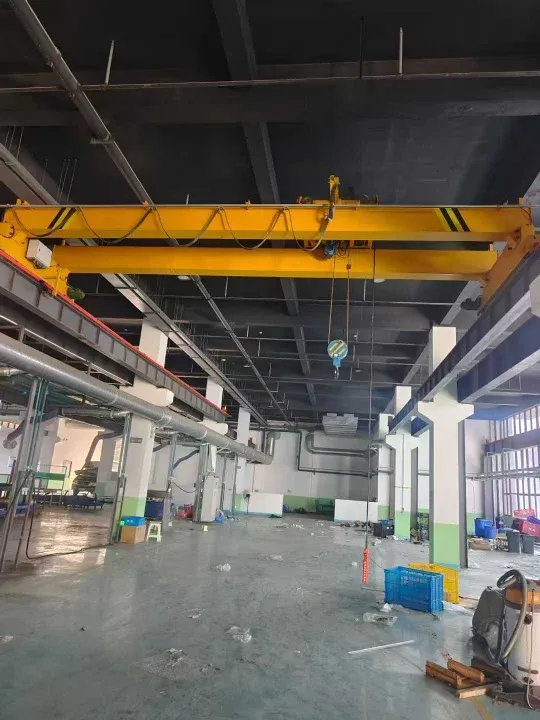
How to Choose the Right Overhead Crane for a New Factory
A Complete Crane Selection Guide for Manufacturing Workshops
Building a new factory is a significant investment, and choosing the right overhead crane is one of the most important decisions during the planning stage. An improperly selected crane can lead to higher operating costs, lower productivity, and expensive modifications in the future.
Whether you are building a steel fabrication workshop, machinery factory, warehouse, automotive plant, or manufacturing facility, selecting the appropriate crane depends on several key factors—not just lifting capacity.
This guide explains how to choose the right crane based on lifting capacity, span, working hours, workshop structure, headroom, and application requirements.
Why Choosing the Right Crane Matters
An overhead crane is a long-term investment that directly affects production efficiency and workplace safety.
Choosing a crane that matches your working conditions can provide several benefits:
- Improve production efficiency
- Reduce maintenance costs
- Lower energy consumption
- Increase equipment lifespan
- Improve lifting safety
- Support future factory expansion
Before selecting a crane, evaluate your actual production requirements rather than simply choosing the largest model available.
Step 1: Determine Your Maximum Lifting Capacity
The first factor to consider is the maximum weight that will be lifted.
Instead of selecting a crane based on average loads, always choose according to the heaviest load that may be handled during production.
Questions to consider include:
- What is the maximum lifting weight?
- Will production increase in the future?
- Will heavier equipment be installed later?
- Is there any possibility of expanding the workshop?
Allowing some capacity for future growth often saves money compared with replacing the crane later.
Step 2: Choose Between a Single Girder and Double Girder Overhead Crane
This is one of the most common questions for new factory owners.
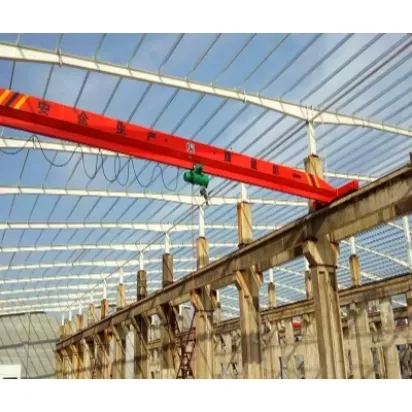
Choose a Single Girder Overhead Crane When
A single girder crane is generally the most economical solution for light and medium-duty applications.
It is recommended when:
- Maximum lifting capacity is 10 tons or less
- Workshop span is relatively small
- Continuous operation is less than 3 hours per day
- Lifting tasks are occasional or moderate
- Budget is an important consideration
Advantages
- Lower purchase cost
- Lightweight structure
- Easy installation
- Low maintenance costs
- Lower wheel load on the building
- Energy-efficient operation
Single girder cranes are widely used in:
- Machine workshops
- Warehouses
- Steel fabrication shops
- Equipment maintenance facilities
- General manufacturing plants
Choose a Double Girder Overhead Crane When
If your factory handles heavy materials or operates continuously throughout the day, a double girder crane is usually the better option.
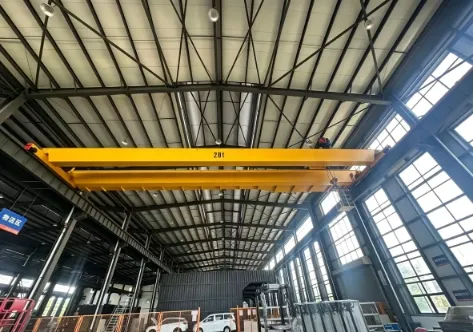
It is recommended when:
- Lifting capacity is 10 tons or above
- Workshop span is relatively large
- Continuous operation exceeds 5–6 hours per day
- Heavy-duty production is required
- Frequent lifting cycles are expected
Advantages
- Higher lifting capacity
- Better structural stability
- Larger lifting height
- Suitable for intensive production
- Longer service life under heavy-duty conditions
Double girder cranes are commonly used in:
- Steel mills
- Heavy equipment factories
- Mold manufacturing plants
- Mining equipment workshops
- Large fabrication facilities
Although the initial investment is higher, the long-term operating performance often justifies the cost.
Step 3: Is Headroom Limited?
Many modern factories have strict height limitations.
If your workshop has limited headroom but requires high lifting efficiency, a traditional crane may not fully utilize the available space.
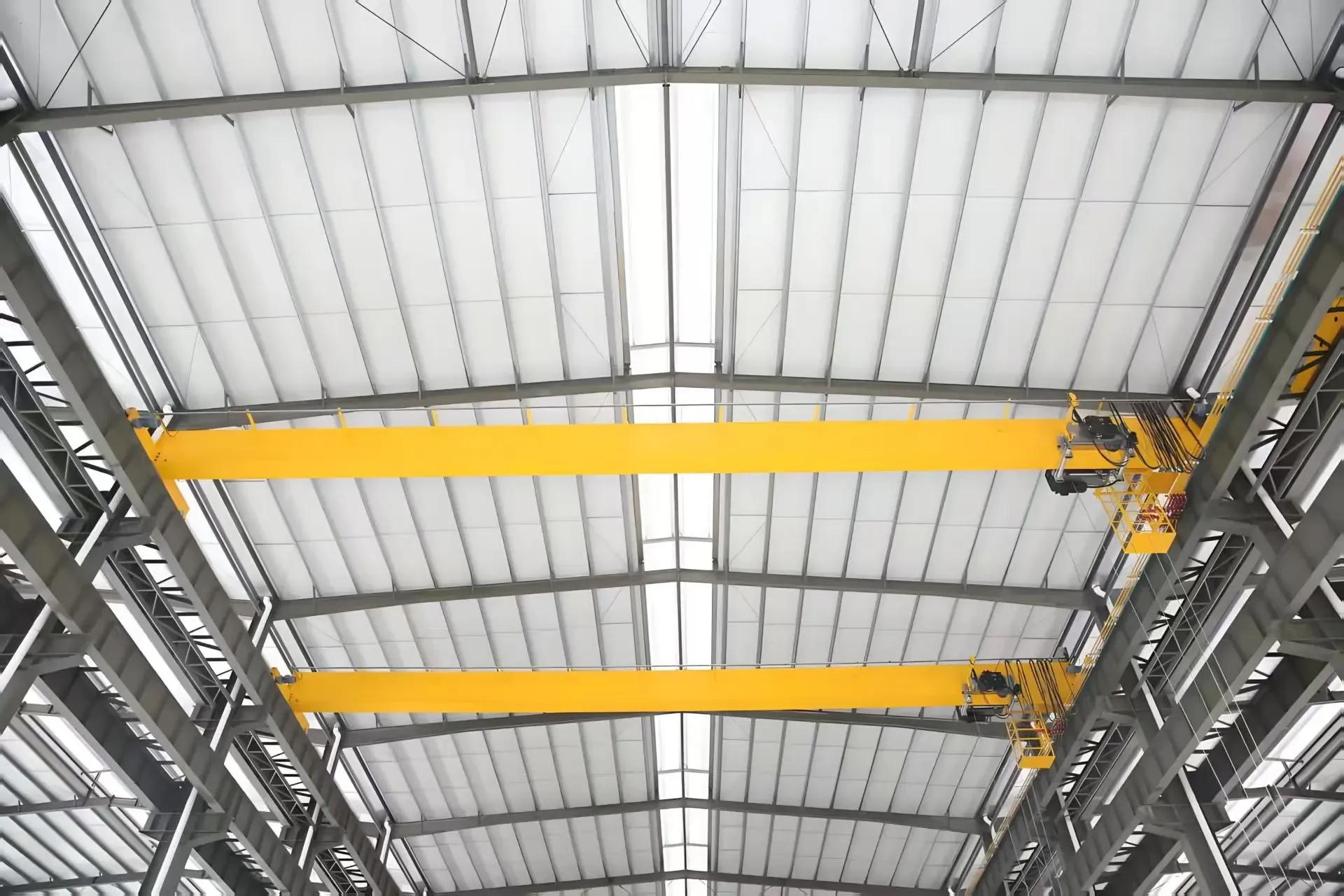
It is particularly suitable when you require:
- Maximum lifting height
- Energy-efficient operation
- High positioning accuracy
- Smooth variable-frequency control
- Low maintenance costs
Advantages
- Compact design
- Reduced self-weight
- Lower wheel pressure
- Increased hook travel
- Higher operating precision
- Lower power consumption
European cranes are increasingly popular in modern manufacturing facilities because they maximize usable lifting height without increasing the building height.
Step 4: Is Your Workshop a Concrete Structure?
Not every factory is designed with crane runway beams.
Many existing buildings or concrete workshops have structural limitations that make traditional overhead cranes difficult to install.
For these situations, a Suspension Overhead Crane is often the ideal solution.
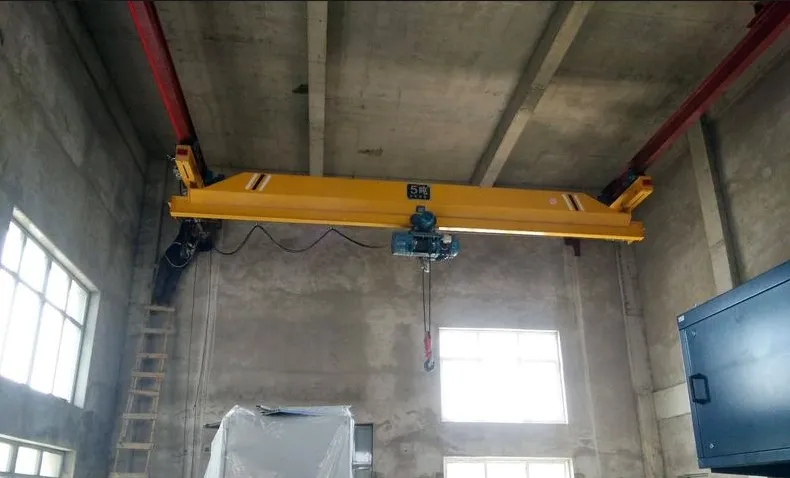
It is suitable for:
- Concrete buildings
- Existing workshops
- Limited installation space
- Assembly lines
- Light-duty lifting operations
Advantages
- Utilizes roof structure efficiently
- Saves floor space
- Flexible installation
- Ideal for workshops with structural limitations
This type of crane is especially useful when floor space must remain clear for equipment and production lines.
Step 5: Do You Only Need Lifting at One Workstation?
Not every production process requires a crane covering the entire workshop.
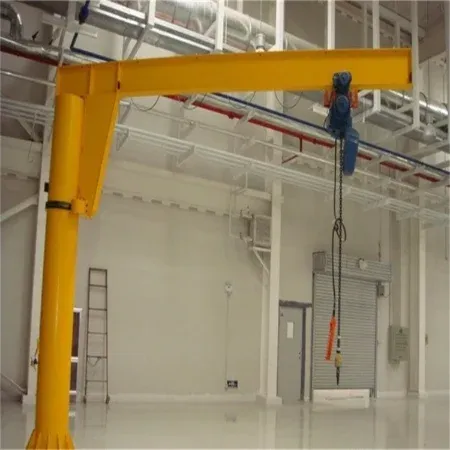
Typical applications include:
- CNC machining centers
- Welding stations
- Maintenance areas
- Assembly workstations
- Loading and unloading positions
Advantages
- 360° rotation
- Small installation footprint
- Easy operation
- Fast installation
- Low investment cost
For localized lifting, a jib crane provides excellent efficiency while minimizing equipment costs.
Quick Crane Selection Guide
Factory Condition | Recommended Crane |
|---|---|
Lifting capacity ≤10 tons | Single Girder Overhead Crane |
Lifting capacity ≥10 tons | Double Girder Overhead Crane |
Large span workshop | Double Girder Overhead Crane |
Limited headroom | European Overhead Crane |
Energy-saving and high-precision applications | European Overhead Crane |
Concrete workshop | Suspension Overhead Crane |
Local workstation lifting | Jib Crane |
Information You Should Prepare Before Contacting a Crane Supplier
Providing accurate technical information allows suppliers to recommend the most suitable solution.
Prepare the following details:
- Maximum lifting capacity
- Span
- Lifting height
- Workshop dimensions
- Building drawings (if available)
- Daily operating hours
- Indoor or outdoor installation
- Power supply voltage
- Working duty classification
- Type of materials to be lifted
The more complete your information is, the more accurate the crane recommendation will be.
Common Mistakes When Selecting an Overhead Crane
Many first-time buyers make similar mistakes.
Avoid the following:
Choosing based only on price
The cheapest crane is not always the most cost-effective over its lifetime.
Ignoring future expansion
Production often grows faster than expected. Selecting a crane with no room for future capacity can lead to expensive upgrades.
Overlooking workshop dimensions
Span, lifting height, runway design, and building structure all affect crane selection.
Underestimating working duty
A crane operating several hours each day requires a different design than one used occasionally.
Consulting an experienced crane manufacturer before purchasing can help avoid costly mistakes.
Conclusion
There is no single crane that fits every factory.
The best solution depends on your lifting capacity, workshop layout, operating hours, structural conditions, and production requirements.
As a general guideline:
- Choose a Single Girder Overhead Crane for light-duty applications up to 10 tons.
- Choose a Double Girder Overhead Crane for heavy-duty production and larger spans.
- Choose a European Overhead Crane when headroom is limited and higher efficiency is required.
- Choose a Suspension Overhead Crane for concrete buildings or workshops with limited installation conditions.
- Choose a Jib Crane for localized lifting at individual workstations.
Selecting the right crane at the beginning of your project helps improve productivity, reduce operating costs, and support your factory's long-term development.
Frequently Asked Questions (FAQ)
What type of crane is best for a new factory?
The answer depends on lifting capacity, span, operating hours, building structure, and available headroom. Most light-duty workshops use single girder cranes, while heavy manufacturing facilities generally require double girder cranes.
Can a single girder overhead crane lift 10 tons?
Yes. Single girder cranes are commonly designed for lifting capacities up to 10 tons. However, if the crane will operate continuously or lift heavy loads frequently, a double girder crane is usually the better choice.
When should I choose a European overhead crane?
A European crane is recommended when your factory has limited headroom, requires energy-efficient operation, or demands high positioning accuracy for precision manufacturing.
Is a jib crane better than an overhead crane?
Not necessarily. A jib crane is ideal for lifting materials within a single workstation, while an overhead crane is designed to transport loads across the entire workshop.
Need Help Choosing the Right Crane?
If you are planning a new factory and are unsure which crane best suits your application, our engineering team can recommend a customized lifting solution based on your workshop dimensions, production requirements, and budget.
Contact us today for a free crane selection consultation and quotation.